
Pet Travel to Puerto Rico. Honestly, the whole thing started because I couldn’t find anyone to watch my dog for two weeks.
I was heading to Puerto Rico for a working trip that kept getting extended, and my usual dog sitter had her own vacation booked. My beagle mix, Mango, is not the kind of dog you can drop at a stranger’s house and hope for the best. She’s anxious, she’s attached to me like Velcro, and she makes a sound when I leave a room that my neighbors have described as “haunting.”
So I started Googling whether I could just bring her.
The amount of conflicting information I found was staggering. Some forums said Puerto Rico required no extra documentation since it’s a US territory. Others warned about quarantine. Someone on a Facebook group said their dog got turned away at the airport. I spent three evenings reading articles that contradicted each other before I finally pieced together what was actually true and booked Mango’s ticket.
Here is what I genuinely wish someone had told me before I started.
Puerto Rico Is Not the Same as Flying to Another State, Even Though It Feels Like It Should Be
This is the part that trips almost everyone up.
Puerto Rico is a US territory, so there is no passport, no customs, no CDC dog import form, and no federal import process to worry about. From that angle, it is technically domestic travel. But Puerto Rico’s Department of Agriculture has its own entry requirements that go beyond what most mainland states ask for, and those rules are enforced at the airport when you land.
Skip the paperwork, and your pet does not enter the island. It is that straightforward.
The good news is that the requirements are absolutely manageable if you know what they are and you plan ahead.
What Your Pet Actually Needs to Enter Puerto Rico
Let me walk through this the way I wish someone had walked me through it before my first trip.
A Health Certificate from a USDA Accredited Vet
This is the most important document and also the one with the trickiest timing. You need a Certificate of Veterinary Inspection signed by a USDA accredited veterinarian. Puerto Rico requires the certificate to be valid for 30 days from the exam date, but most airlines want it issued within 10 days of your travel date. So the 10 day airline window is the one that controls your timing.
My personal system: I book the vet appointment one to two days before my flight. That way the certificate covers the airline deadline, the parasite treatment window (more on that in a moment), and still has plenty of time left before the 30 day Puerto Rico expiration.
The certificate has to specifically state that your pet did not come from an area quarantined for rabies. Your vet will know how to word this. Just tell them you are traveling to Puerto Rico and they will handle it.
Rabies Vaccination That Falls in a Specific Window
Here is the detail that caught me off guard the first time. Puerto Rico does not just want proof that your dog or cat has been vaccinated against rabies. They want the vaccine to have been given between 28 days and 6 months before your arrival date.
That window on both ends is intentional. The 28 day minimum is because rabies vaccines need time to build immunity. The 6 month maximum is so the certificate stays current.
So if your dog’s rabies shot was given 7 months ago, it does not matter that it is technically still “valid” in your home state. Puerto Rico will not accept it.
I learned this about two months before a trip when I realized Mango’s rabies booster was 8 months old. I had her revaccinated, waited the required 28 days, and booked the flight for after that window had passed. Problem solved, but only because I checked in time.
Flea and Tick Treatment Within 72 Hours of Arrival
This one has a hard deadline that is easy to misjudge.
Your pet must receive treatment for external parasites, specifically fleas and ticks, within 72 hours of entering Puerto Rico. And it is not enough to just do the treatment at home and hope the inspector takes your word for it. The product name and date of application have to be written on the health certificate, in your vet’s handwriting, with their signature.
If that line is missing from the certificate, Puerto Rico airport inspectors will not accept it.
This is why I schedule the vet appointment one to two days before departure. It covers both the certificate issuance and the parasite treatment, in one visit, with everything documented on the same form.
A Microchip
Puerto Rico requires pets to have individual identification, and a microchip is the standard way to meet this. If your pet is already microchipped, just confirm the chip is readable and that the number is current in a registry like HomeAgain or PetLink.
If your pet is not microchipped, get it done before your trip. It takes about 30 seconds at the vet, costs $25 to $60, and matters a lot if your dog somehow gets loose in San Juan, which is not a hypothetical I want to think about given how chaotic the streets can get near the old city.
Puerto Rico has an enormous stray dog population, estimated at over 500,000 island wide. If Mango ever got away from me there, I would want her to have a chip that linked back to me immediately.
Flying With Your Dog or Cat: The Airline Side of Things
Once your documents are sorted, you still have to actually get on a plane.
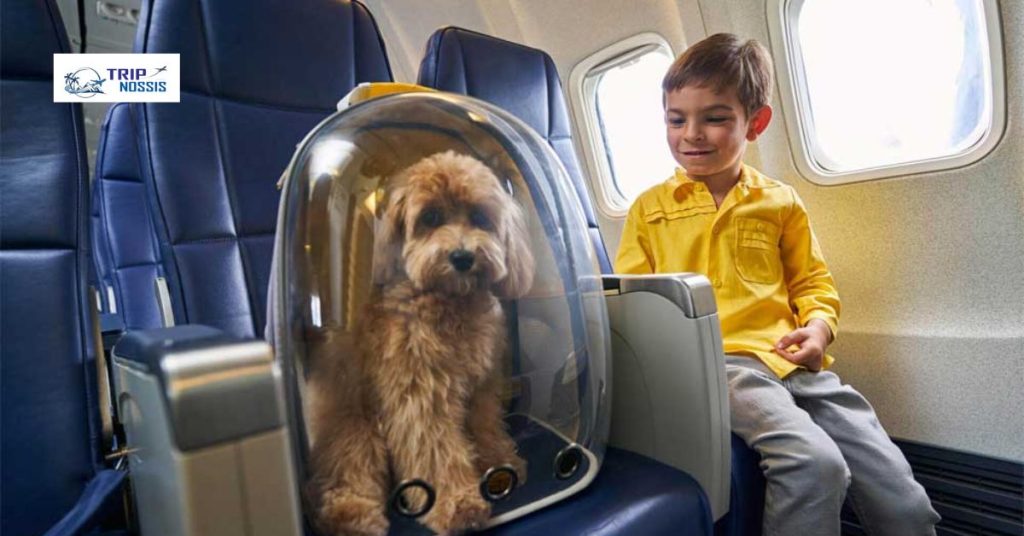
For smaller dogs and cats, flying in the cabin under the seat is the preferred option and the one I have used with Mango every time. Most airlines allow in cabin pets on Puerto Rico routes since they are treated as domestic flights, but each airline has its own carrier size limits, pet fees, and breed restrictions.
The standard in cabin carrier restriction is usually around 18 by 11 by 11 inches, and your pet plus the carrier typically needs to stay under 20 pounds. Mango is 14 pounds and fits fine. If your dog is larger, they will likely fly as checked cargo, and you will need an IATA approved hard sided crate.
One thing worth knowing: brachycephalic breeds, meaning flat faced dogs like Bulldogs, Pugs, Boxers, and French Bulldogs, face restrictions on most airlines regardless of the route. Some carriers will not allow them in cargo at all. If you have a flat faced breed, call your airline directly and confirm their specific policy before you book anything.
For in cabin travel, the fees typically run $95 to $150 each way depending on the airline. Book early and tell the airline you are traveling with a pet when you reserve your ticket, because most airlines limit the number of pets allowed per flight.
What Happens at the Airport in San Juan
When you land at Luis Munoz Marin International Airport, which goes by SJU, you will need to go through a pet inspection process with Puerto Rico’s Department of Agriculture inspectors.
They will check your health certificate, verify the rabies documentation, confirm the flea and tick treatment is noted, and look at your pet’s identification. This process can take anywhere from 30 minutes to a few hours, depending on how busy the agricultural inspection area is and how many other travelers have pets that day.
Pets can only enter through SJU, and there is a timing consideration worth knowing: according to current guidelines, pets should arrive before noon to allow enough time for clearance procedures. If you have flexibility in booking your flight, an early morning departure from the mainland that gets you into San Juan before noon is the safer choice.
What to Do Once You Are Actually There
Here is where Puerto Rico surprised me in the best way.
The island is more pet friendly in practice than most Caribbean destinations. The culture around animals is different from what you might expect. Dogs are everywhere in San Juan’s neighborhoods, people walk them through Condado in the evenings, and plenty of restaurants with outdoor seating will quietly wave you over to a table with your dog without making a fuss about it.
BringFido lists quite a few dog friendly spots in San Juan specifically. Café Tresbé in San Juan has outdoor seating that welcomes dogs for breakfast, lunch, and dinner. Anita Gelato in the city actually makes a small cup of doggie gelato for your pet, which sounds absurd but Mango treated it like the highlight of the entire trip. The Miramar Food Truck Park is another casual outdoor spot where dogs are welcome alongside their owners.
For outdoor time, the Condado dog park at the San Juan Pet Park on Luchetti Street has an agility course and shaded gazebos. Hobie Cat Beach in Isla Verde allows dogs on the sand. Ocean Park Beach in Condado is another good option for a beach day with your dog.
El Yunque National Forest, the only tropical rainforest in the US National Forest system, is dog friendly as well. Dogs are welcome on the hiking trails throughout the forest on a leash, which means your pet can experience one of the most genuinely remarkable natural settings in the entire Caribbean.
For hotels, La Concha Resort in San Juan is one of the higher profile pet friendly options with beach access. Several Airbnb properties in the Condado and Santurce neighborhoods also welcome pets, though fees vary significantly by host. Always confirm the pet policy and any additional fees before booking, because “pet friendly” on Airbnb can mean anything from no extra charge to a $150 cleaning fee per stay.
Mistakes I Made (So You Don’t Have To)

The timing mistake on the rabies vaccine was the biggest one, and I covered that above. But there were others.
I once brought a soft sided carrier that was technically within the dimension guidelines but had a zipper that the airline agent wanted to test by pressing on the top of the carrier. It flexed inward. She flagged it as not structurally sufficient for in cabin travel. We made it work only because I had a backup hard sided carrier in my checked bag, which I had packed almost as an afterthought. Now I always travel with the hard sided one.
I also did not account for how warm the airport in San Juan can feel when you are standing in the agricultural inspection line with an anxious dog who is already overheated from the flight. Bring a small collapsible water bowl and a bottle of water in your carry on. Mango was panting by the time we cleared inspection, and I felt terrible about it. Now water is the first thing I pack.
One more thing worth mentioning: do not sedate your dog before a flight, even if they are anxious. Sedatives can interfere with breathing and circulation at altitude, and airlines can and do refuse to transport sedated animals. If Mango is anxious before a flight, I use an Adaptil pheromone collar, which I put on her about a day before travel. It is not magic, but it takes the edge off.
The Return Trip Is Much Simpler
Flying back from Puerto Rico to the mainland is a straightforward domestic flight with no special pet requirements beyond your airline’s standard rules. Puerto Rico to the continental US is treated exactly like flying between two US states. No extra documentation, no agricultural inspection on the mainland side.
The outbound trip is where all the prep work goes.
Is It Worth It?
Every time I land back in San Juan with Mango, I watch her figure out where she is. She does this thing when she smells the warm air off the tarmac, where her whole body posture changes. She goes from being a tightly wound travel dog to this loose, curious animal who wants to sniff everything immediately.
It is worth every piece of paperwork.
The key is simply not leaving the documentation to the last week. If you start the process a month before your trip, confirm your vet is USDA accredited, get the rabies timing right, and schedule your appointment one to two days before your flight, the whole process becomes manageable. Puerto Rico is not trying to make it hard for you to bring your pet. It just has a few specific rules, and those rules are easy to follow once you actually know what they are.
Bring your dog. Get the paperwork right. Buy Mango the doggie gelato. You will be glad you did.
Have a question about a specific breed restriction or a particular airline’s pet policy for Puerto Rico flights? Leave it in the comments, and I will share what I know.
If you have a pet, you can use our Pet Friendly Road Trip Planner to plan your trip