

The call came on a Tuesday afternoon. My sister had just taken a job in Portland, Oregon — and she was calling from her apartment in Atlanta, panicking, because she had a 65 pound Labrador named Biscuit who absolutely could not make a five-day cross country drive in July heat.
“Can you just… ship a dog?” she asked me.
I told her I’d figure it out. Three weeks, a lot of phone calls, two vet visits, and one very expensive lesson about airline breed restrictions later, Biscuit made it to Portland just fine. But we made almost every rookie mistake in the book along the way.
If you’re sitting here right now wondering how to ship a dog to another state or even internationally, this is the guide I wish I’d had.
First, Let’s Talk About What “Shipping a Dog” Actually Means
When most people hear the word “ship,” they picture a box going through FedEx. To be completely clear: you cannot ship a dog through FedEx, UPS, or the US Postal Service. These carriers do not transport live pets (except for certain fish, insects, and reptiles under very specific conditions).
Shipping a dog means transporting them via one of three real options:
- Flying as cargo on an airline
- Flying in-cabin (for smaller dogs only)
- Ground transport via a professional pet transport service or driver
Each one has a very different experience, cost, and set of requirements. The right choice depends entirely on your dog, their size, their breed, their temperament, and how far they need to go.
Let me walk you through each one honestly.
Option 1: Ground Transport — The One I Now Recommend First
After going through the whole experience with Biscuit, ground transport is the first thing I’d tell anyone to look at seriously. I didn’t even consider it at first because I assumed it would be wildly expensive. Turns out, it’s often cheaper than flying, and for many dogs, especially bigger breeds and anxious ones, it’s genuinely the safest option.
Here’s how it works: professional pet transporters drive your dog from point A to point B, usually in climate-controlled vehicles built specifically for animal transport. Some do shared rides (your dog travels with other pets), others do private runs where it’s just your dog and the driver.
The platform I kept seeing recommended was CitizenShipper, it’s basically a marketplace where you post your transport job, and vetted drivers submit bids. CitizenShipper is the largest pet transportation marketplace in the United States, connecting pet owners with independent, background checked drivers who specialize in animal transport. You can read driver reviews, message them directly, and compare quotes before you commit to anything.
What does ground transport actually cost?
A shared ground transport ride might cost $0.50 per mile, while a private ride can run up to $1.60 per mile.
So for a 2,500-mile cross-country trip:
- Shared ride: roughly $1,250
- Private ride: roughly $4,000
That’s a wide range. But for a medium or large dog, especially a flat-faced breed, ground transport is often the only realistic option.
Biscuit’s situation: My sister’s Lab was 65 pounds, and she’d already learned the hard way that Delta had suspended general cargo pet transport. Ground was her best bet. We found a driver through CitizenShipper who specialized in large dogs, had over 50 five-star reviews, and provided GPS tracking updates throughout the trip. Biscuit arrived in Portland after three days, a little tired, but totally fine. The cost was about $1,400 for a private Atlanta to Portland run, which, when you factor in hotels, gas, and the stress of a solo cross-country drive, was honestly worth every cent.
Option 2: Flying Your Dog — The Fastest but Trickiest Route
Flying is faster, no question. A cross country flight takes six hours instead of five days. But the rules are complicated, the breed restrictions are real, and a few airlines have significantly pulled back their pet programs in recent years.
Small dogs: the in-cabin option
If your dog is small enough, typically under 20 pounds combined with their carrier, they can fly in the cabin with you, tucked under the seat in front. Small dogs that meet airline size and weight limits can travel in-cabin under your seat in an approved carrier. Most airlines require that your dog be able to stand, turn around, and lie down comfortably inside the pet carrier. In-cabin carriers are typically limited to 18-20 inches in length and between 15-20 pounds combined with the pet.
In-cabin fees are usually $100 to $200 per flight, depending on the airline. But there’s a catch: your dog has to be with you on the same flight. They can’t fly in-cabin alone.
If you can’t travel with them yourself, you’d need to hire what’s called an air nanny, a professional who books a ticket on your dog’s flight and flies with them in-cabin. If you aren’t flying with them, you’ll need to hire an air nanny. This service can run from $300 for short trips to over $1,500 for complex routes or overseas flights.
Large dogs: cargo
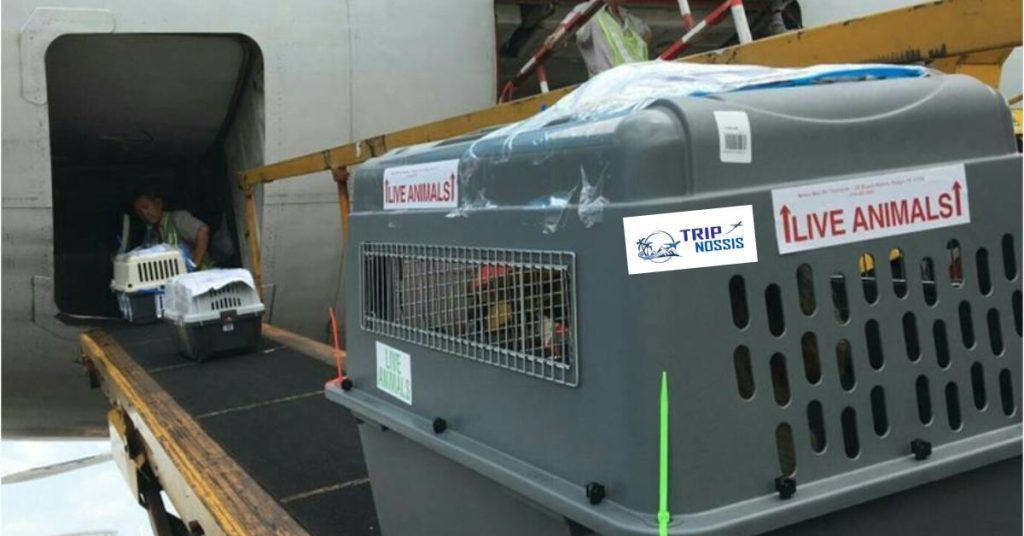
Large dogs that can’t fit under the seat travel as air cargo, in the pressurized, temperature-controlled hold of the plane. The cargo hold is not the same as the baggage compartment; it’s a separate, regulated space specifically for live animals.
But here’s what you need to know about which airlines still do this, because the landscape has changed significantly:
As of 2026, only a few major U.S. airlines still transport dogs in cargo holds. Alaska Airlines, American Airlines, and United Airlines offer cargo pet transport programs, though each has breed, size, and seasonal restrictions. Delta Air Lines suspended its cargo pet transport program.
So if you’re planning on flying a large dog, you’re working with a short list. Call the airline directly and confirm current policies before you book anything else — these rules change with little warning.
The breed restriction issue (this one is serious)
This is what caught my sister off guard initially. She assumed any healthy dog could fly cargo. Not true.
Brachycephalic (snub-nosed) dog breeds, including Bulldogs, Pugs, Boston Terriers, Boxers, Pekingese, Shih Tzus, and Cavalier King Charles Spaniels, are banned from air cargo. These breeds have narrowed airways that make the stress and pressure changes of air travel genuinely dangerous for them. Many airlines won’t take them at all, even in-cabin, depending on the route.
If you have a flat faced breed, assume ground transport from the start. Don’t try to argue with the airline at the checkin counter.
How to Ship a Dog to Another State: Step-by-Step
Whether you choose air or ground, there are steps that apply to every interstate dog transport. Skip any of these, and you’ll find out the hard way.
Step 1: Get a Certificate of Veterinary Inspection (CVI)
Almost every transport method and every destination state requires this. If your pet is traveling as cargo, most airlines require a health certificate issued by a USDA accredited vet. It confirms your dog is healthy and free from contagious diseases and is valid for 10-30 days from the exam date.
That time window is tight. Don’t get it too early. Schedule it close to your transport date, but leave yourself a buffer in case the transport gets delayed.
Cost: Most transporters require a certificate of veterinary inspection, which usually costs $75 to $250.
Step 2: Confirm your dog’s rabies vaccination is current
Every state requires proof of a current rabies vaccine. It should include the dates of vaccination and expiration, vaccine manufacturer, product name, serial number, and your vet’s signature and license information.
Make a physical copy and a digital copy. Keep both.
Step 3: Get the right crate
This matters more than most people realize. Airlines have strict, non negotiable crate requirements.
Cages must meet IATA and USDA standards for size, ventilation, strength, materials, and labeling. The crate must allow the dog to stand, turn around, and lie down naturally. The construction must be rigid plastic or metal with metal nuts and bolts.
The plastic clip connectors that hold cheap crates together? Most airlines won’t accept them. Metal hardware only for cargo travel.
You’ll also need to budget a couple of hundred dollars for an airline approved crate, especially for large breeds.
For ground transport, requirements are less strict, but a secure, well-ventilated crate is still non-negotiable.
Step 4: Don’t sedate your dog
I know it’s tempting. Biscuit got anxious on car rides, and my sister wanted to give him something. The vet said no, and for good reason.
Never use sedatives, as they can interfere with breathing and circulation, especially during air travel. Airlines don’t allow sedated dogs in cargo.
If your dog has anxiety, talk to your vet about pheromone collars, calming sprays, or anxiety wraps instead. These are safer and don’t interfere with breathing the way sedatives do.
Step 5: Label everything and pack essentials in the crate
Attach a label to the crate with your name, phone number, destination address, and a brief description of feeding and medication needs. Include a small bag of food attached to the outside. Most transporters and airlines will feed your dog during a long trip if you label the portions clearly.
Freeze a small water dish and attach it inside the crate. It melts slowly during transit and provides water without spilling immediately.
How Much Does It Cost to Ship a Dog to Another State?
Let’s talk real numbers, because this is what everyone actually wants to know.
According to a 2026 report, you’re likely looking at a total cost between $500 and $1,500+ to ship your dog to another state. But that range is wide for a reason; a 10 pound Chihuahua flying in-cabin is a completely different situation from a 90 pound German Shepherd going by private ground transport.
Here’s a practical breakdown:
| Method | Estimated Cost |
|---|---|
| In-cabin (small dog, you’re traveling too) | $99–$200 per flight |
| Air nanny (in-cabin, without you) | $300–$1,500 |
| Air cargo (large dog) | $500–$1,200 |
| Ground transport, shared ride | ~$0.50/mile |
| Ground transport, private | ~$1.60/mile |
| Health certificate (vet visit) | $75–$250 |
| IATA-approved crate (if needed) | $100–$300 |
One thing people consistently underestimate: the preparation costs. The health certificate, the proper crate, the vet visit, these add up before you’ve even paid for the transport itself. Budget for them from the start.
How Much to Ship a Dog Internationally?
If you’re moving abroad or picking up a dog from another country, the costs and complexity jump significantly.
Most international dog relocations range from $3,000 to $10,000, depending on destination, airline cargo fees, crate size, and veterinary preparation.
For a full-service door to door international move with a pet relocation company, the starting price is around $4,500 USD for one pet.
What drives international costs up:
- Import permits for the destination country
- Rabies titer blood tests (some countries require them months before travel)
- USDA-endorsed health certificates (more involved than a standard CVI)
- Quarantine fees, some countries like Australia mandate a minimum 10 day quarantine, which alone can cost over $2,000
- Customs clearance agents at the destination
Specialist tests like the Rabies Neutralizing Antibody Titre Test required for Australia cost $400 to $600 per pet, plus USDA document endorsement fees ranging from $38 to $173.
If you’re moving internationally with a dog, I’d strongly suggest working with a certified pet relocation specialist rather than trying to DIY it. The paperwork requirements vary drastically by country, and getting it wrong means your dog gets turned back at customs or worse, held in quarantine unexpectedly. The International Pet and Animal Transportation Association (IPATA) maintains a directory of certified relocation agents worldwide and is a solid place to start.
Mistakes I’ve Seen People Make (Learn From These)

Waiting too long to book. Good ground transport drivers book up weeks in advance, especially during summer. The best ones fill fast. Start the process at least three to four weeks before you need transport.
Not checking breed restrictions before purchasing flights. This is painful to watch happen at the checkin counter. Always call the airline, ask specifically about your breed and crate dimensions, and get a confirmation email.
Buying the wrong crate. A crate that’s just slightly too small will get your dog rejected at checkin. Measure your dog from nose to tail base, shoulder height, and shoulder width. Then add inches to each dimension per IATA guidelines. When in doubt, go bigger.
Skipping the health certificate because the dog “seems fine.” Doesn’t matter how healthy your dog looks. No certificate, no transport. This is non-negotiable for interstate and international moves.
Assuming the cheapest driver is fine. On CitizenShipper or similar platforms, read every review carefully. Look for drivers who provide GPS updates, have experience with your dog’s breed and size, and respond to messages quickly. The cheapest bid isn’t always the best choice when it’s your dog in the vehicle.
A Word on Timing and Seasons
This one surprised me: airlines impose temperature embargoes during extreme heat and cold, particularly for cargo transport. If it’s above a certain temperature at either the departure or arrival airport, many airlines restrict pet travel during periods of extreme heat or cold, especially for cargo shipments.
This means summer and winter moves can get complicated. If you’re planning a July shipment from Phoenix or a January cargo shipment through Chicago, build in extra flexibility. Ground transport handles weather variability better than air, since drivers can adjust their route and timing.
So, Which Method Is Right for Your Dog?
Here’s how I’d think about it:
Go with in-cabin air travel if: Your dog is under 20 pounds, you’re flying with them yourself, and the trip is too long to drive comfortably.
Go with cargo air travel if: Your dog is healthy, not a brachycephalic breed, you’re moving coast to coast, time matters more than money, and you’ve confirmed the airline and route are available.
Go with ground transport if: Your dog is a large breed, a flat faced breed, anxious, or elderly, or you want the peace of mind of knowing a human is with your dog the entire time. Ground transport is also the right call if you can’t travel with your dog yourself and an air nanny feels too complicated or expensive.
At the end of the day, Biscuit got to Portland in one piece and spent his first week there running around the yard with my sister. The transport cost money and took planning, but it was completely doable once we understood the options.
The biggest thing I learned: start earlier than you think you need to, get the health certificate sorted right before travel, and pick the transport method based on your dog, not your budget. You can find ways to economize on a lot of things. Your dog’s safety on a cross-country move isn’t one of them.
Have questions about a specific route, breed, or situation? Drop them in the comments, happy to share what I’ve learned.
If you have a pet, you can use our Pet Friendly Road Trip Planner to plan your trip