
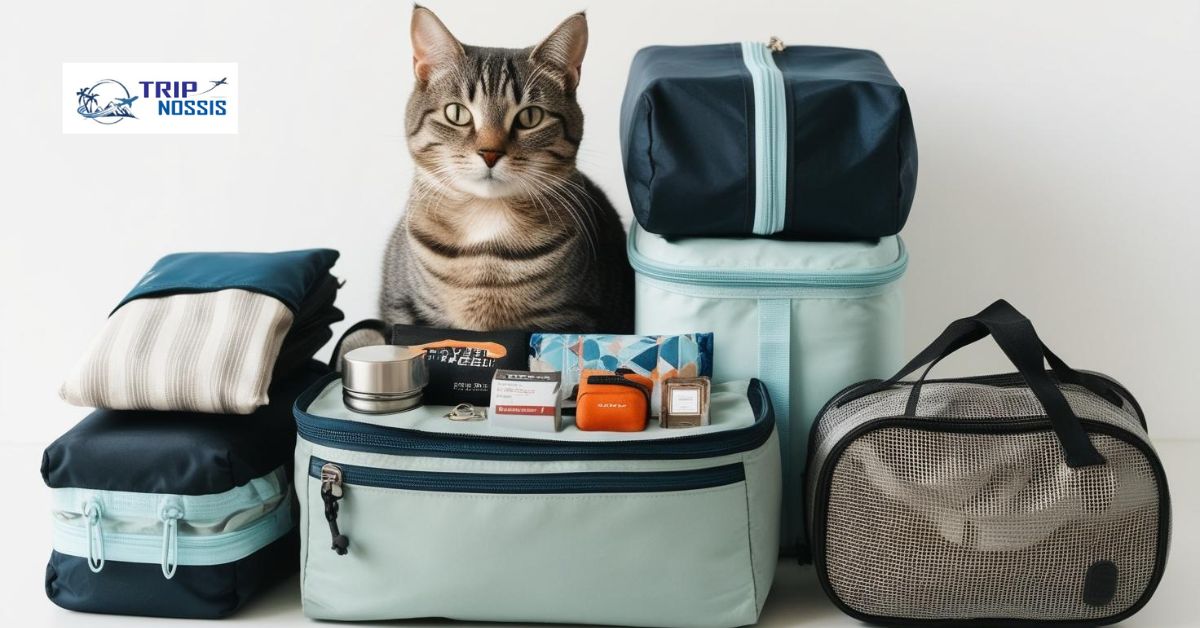
How Long Can a Cat Stay in a Carrier? The first time I drove from Nashville to Dallas with my cat Mango, I was completely unprepared. I had a cheap soft sided carrier, no plan, and the naive belief that cats just… handle things. Six hours in, Mango had soiled the carrier, refused water for the entire trip, and spent the last two hours yowling so loudly I could barely hear my GPS.
That trip taught me more about cat carriers than any vet visit ever could.
I’ve since moved cross country twice with Mango, done several shorter road trips, and even taken one flight from Denver to Portland. I’ve had the conversations with vets, read everything I could find, and made enough mistakes to actually know what works. So if you’re wondering how long can a cat stay in a carrier, I’ll give you the honest, been-there answer.
The Short Answer (But Keep Reading)
Most vets agree that 6 to 8 hours is the reasonable upper limit for a healthy adult cat to stay in a carrier without a break. But that number comes with a lot of “it depends.”
It depends on your cat’s age, temperament, health, whether they’ve eaten recently, and how well the carrier is set up. A calm 4 year old cat who’s used to car travel in a roomy, ventilated carrier with a familiar blanket inside? Probably fine for 6 to 7 hours. A senior cat with anxiety in a tiny plastic box with no familiar smells? That same timeframe could feel genuinely cruel.
When people ask me how long can cats stay in a carrier, I always ask back: What’s the setup, and what’s the cat like?
What Happens Inside a Carrier Over Time
Here’s something most articles skip over. The discomfort doesn’t hit a cat all at once. It builds gradually, and understanding that progression helps you plan better.
For the first hour or two, most cats are in what I call “alert mode.” They’re nervous, watchful, maybe vocalizing a little. Mango used to do this thing where she’d paw at the carrier door for about 20 minutes, then just give up and lie down. That phase, honestly, is not too bad.
After the two or three hour mark, confinement starts to feel less temporary to them. They’ve now been sitting in the same position, in the same cramped space, with no bathroom access, for a meaningful chunk of time. You might notice heavier panting, more persistent meowing, or the opposite, an eerie silence that can mean stress.
Beyond five or six hours, if there’s been no break, no water offered, no human reassurance, that’s where things get uncomfortable for your cat. Not dangerous necessarily, but uncomfortable in a way that can affect their trust and behavior after the trip.
How Long Can My Cat Stay in a Carrier for Different Types of Trips?
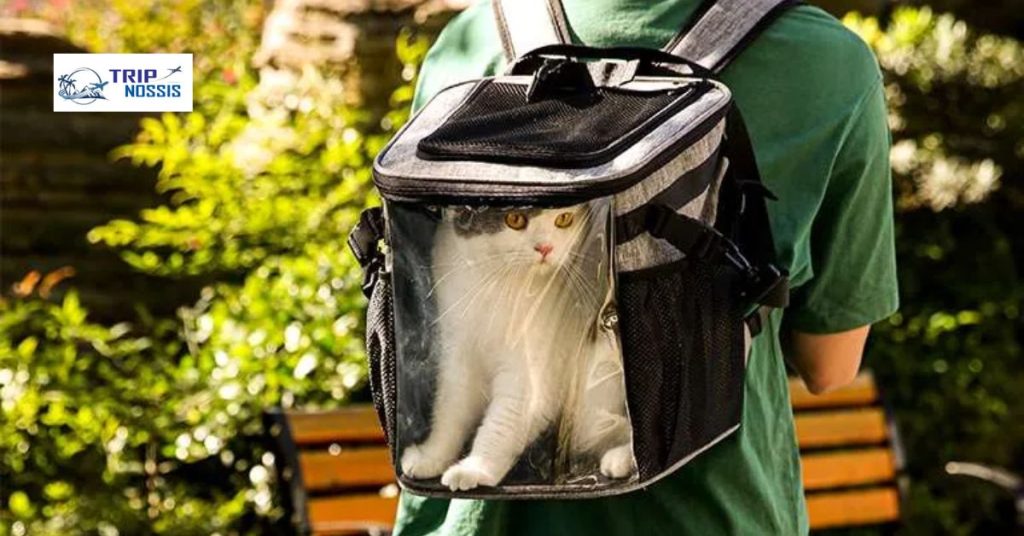
Let me break this down by the actual scenarios I’ve dealt with, because the context really does change the answer.
Vet visits (under 2 hours total): This is nothing, even for a nervous cat. You don’t need to worry about carrier time at all here. Just make sure the carrier isn’t a stranger to them beforehand.
Road trips in the 3 to 5 hour range: This is very manageable. I’d stop once, around the midpoint, to offer water and let your cat stand up and stretch inside a safe, enclosed space (never a rest stop parking lot with the carrier door open). Some cats will drink from a syringe at these stops; Mango took about four trips to even consider it.
Long road trips, 6 to 12 hours: This is where real planning matters. You want to break this into segments of no more than 4 to 5 hours. If you’re driving 10 hours, that’s at least two meaningful breaks. I’d also strongly recommend getting a larger carrier if you’re doing distances like this. The Petmate Two Door carrier or the Sleepypod Air are ones I’ve used and both gave Mango noticeably more room than those rigid plastic ones from big box stores.
Flights: This one surprised me. Domestic cabin flights typically run 2 to 5 hours, and most cats handle this reasonably well in an under-seat carrier like the Sherpa Deluxe. The noise and pressure are stressors, but the duration usually isn’t the main issue. Talk to your vet before any flight, especially about mild calming support if your cat is prone to severe anxiety.
Overnight or multi-day travel: Don’t do this without hotel stops where your cat can come out of the carrier in a safe, closed room. Keeping a cat locked in a carrier overnight is genuinely inhumane.
The Setup Makes an Enormous Difference
After my Nashville to Dallas disaster, I completely overhauled how I prepared Mango’s carrier, and the change in her travel behavior was dramatic.
The first thing I did was leave the carrier out in my apartment for two weeks before the trip. Not closed, just open with a blanket inside that smelled like me. Mango started sleeping in it voluntarily. By the time the trip came around, the carrier wasn’t a threat, it was just her weird little house.
I switched to a carrier that was one full size larger than what I’d been using. The rule of thumb is your cat should be able to stand up, turn around, and lie down comfortably. If they can’t do all three, the carrier is too small.
I lined the bottom with a pee pad under a soft cover. Not glamorous, but after the Nashville incident, I wasn’t taking chances. If an accident happened, I could at least manage it.
I also started using Feliway spray on the carrier lining about 30 minutes before loading Mango in. It’s a synthetic version of a calming pheromone, and while I was skeptical at first, our vet recommended it and I genuinely noticed a difference in how quickly Mango settled during trips.
Common Mistakes I Made (So You Don’t Have To)
Feeding a full meal right before a long trip is probably the most common carrier mistake I see people make. I did it too. A full stomach, motion plus anxiety is a recipe for a very unhappy carrier. My vet now tells me to feed a small meal 3 to 4 hours before travel, then nothing until the next natural feeding time.
Putting the carrier in the trunk or the very back of an SUV is another one. Mango was calmer when she could see me. Now she rides in the back seat where she can hear my voice and occasionally make eye contact when I glance in the mirror.
Not acclimating the cat to the carrier at all and then expecting a calm ride is probably the biggest mistake of all. If your cat only ever sees the carrier when something stressful is about to happen, the carrier itself becomes a stress trigger. I learned this after Mango started hiding under the bed every time I pulled it out of the closet. Now she knows it’s just furniture.
Forgetting ventilation is also real. In warm weather, a carrier in direct sunlight in a car can heat up shockingly fast. Position it in a shaded spot and crack the windows or keep the AC running. Don’t ever leave your cat in a parked car.
Signs Your Cat Has Been in the Carrier Too Long
You don’t always get to pick when to stop, especially on a road trip with a schedule. But knowing what to watch for helps you intervene sooner.
Heavy open-mouth breathing that isn’t related to heat is a red flag. Cats are not like dogs; they don’t pant just to cool down. If Mango ever panted in her carrier, I pulled over.
Excessive drooling, especially if your cat doesn’t drool normally, can signal stress or nausea.
A cat that’s gone completely silent after being vocal can actually be more worrying than one that’s meowing. That shutdown behavior sometimes means they’re overwhelmed.
And obviously, if your cat has vomited or had an accident, that’s a signal to stop and clean things up as soon as safely possible.
What About Kittens and Senior Cats?
Kittens actually tend to adapt to carriers faster than adults, but they also tire more quickly and need more frequent feeding. For a kitten, I’d keep carrier time to 3 to 4 hours max before a meaningful break.
Senior cats are the ones I’d be most careful with. Older cats are more prone to joint stiffness, more sensitive to temperature changes, and often have underlying conditions that stress can aggravate. If you have a cat over 12, definitely have a vet conversation before any long trip. Some older cats do fine; some really don’t.
A Quick PreTrip Checklist That’s Actually Saved Me
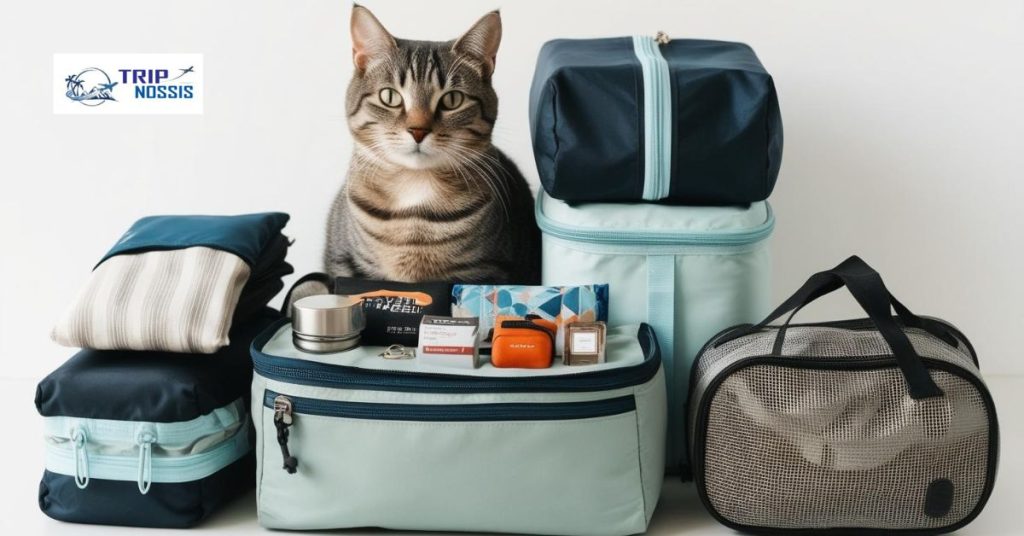
A few days before any trip over two hours, I run through this in my head:
Has the carrier been out and available for the cat to explore recently? Is the carrier the right size for where my cat is now, since Mango went through two size changes as she grew? Do I have water and a small syringe for mid-trip hydration? Is the route planned with at least one stop for every 4 to 5 hours of drive time? Have I talked to my vet if there are any health concerns?
That last one matters more than people think. For my Denver to Portland flight, my vet suggested a very low dose of gabapentin for Mango. It took the edge off her anxiety without sedating her, and it was genuinely the smoothest trip we’d ever had.
The Honest Bottom Line
How long can a cat stay in a cat carrier? For a healthy adult cat with a proper setup, 6 to 8 hours is workable if you’re offering breaks, water, and reassurance. But I’d personally aim for 4 to 5 hour segments max, then give your cat a real break somewhere safe.
The carrier itself, the prep, the cat’s individual temperament, and the comfort of the environment all matter as much as the clock. I’ve seen cats ride 7 hours without a peep and others fall apart after 90 minutes. Your cat will tell you where they fall on that spectrum, and the more trips you do with them, the better you’ll get at reading the signals.
Start small, build up gradually, and treat carrier comfort as something you train for, not something you assume. Mango and I are proof that even the worst trip can lead to a cat who eventually rides like a champ.
If you have a pet, you can use our Pet Friendly Road Trip Planner to plan your trip