
Type “cross country road trip with dog” into a search bar and most of what comes back is packing lists. What gets covered far less often is the stuff that actually determines whether the trip goes well: how many miles you can realistically cover in a day with a nervous traveler in the back seat, which states expect paperwork you probably don’t have yet, and what to do if the nearest emergency vet turns out to be ninety minutes away in rural Nebraska.
This guide covers the planning side of a cross country road trip with a dog, cat, or other travel companion, starting with the vet visit a few weeks before departure and ending with the questions worth asking a hotel before you book. Some of it applies just as well to a shorter regional loop. Most of it becomes essential once the trip stretches past a few days and crosses several state lines.
Is a Cross Country Road Trip With a Dog a Good Idea?
Most healthy, moderately social dogs handle a cross country road trip well when the trip is paced around their needs instead of a fixed mileage goal. The dogs who struggle are usually the ones asked to sit in a car for eight or nine hours with a single stop, not the ones on a slower drive covering the same distance across more days.
A few groups need extra thought before committing to the full distance. Puppies who haven’t completed their vaccination series are more vulnerable to illness picked up at busy rest stops and dog parks, so it’s worth talking to a vet about timing. Senior dogs, and dogs with joint pain or a heart condition, generally do fine on a well paced trip, but a pre trip vet check is a reasonable step to confirm nothing about the itinerary itself is a problem.
Dogs who get carsick or anxious in the car are not automatically poor candidates for a long trip. A vet visit before departure is worth scheduling early, since there are both prescription and non prescription options for motion sickness and anxiety, and a vet can recommend one based on your dog’s actual health history rather than general internet advice.
Cats and other small pets can also make the trip, though the approach differs. Cats generally do better secured in a covered carrier for the whole drive rather than allowed to roam loose, since a loose cat in a moving car is both a safety hazard and one of the most common reasons pets go missing at a rest stop.
Preparing Your Dog Before You Leave
The week you leave is not the week to figure out whether your dog tolerates a crate, whether your vaccination records are current, or whether your dog’s tag has your actual phone number on it. Preparation for a cross country road trip with a dog really starts two to three weeks out.
Vet Visit and Travel Paperwork
Book a vet visit two to three weeks before departure. This gives time to catch anything that needs treatment, update any vaccines that have lapsed, and request copies of vaccination records to carry with you in both paper and photo form.
Interstate travel with a pet is regulated at the state level, not federally. According to the USDA’s Animal and Plant Health Inspection Service (APHIS), the agency does not oversee interstate pet movement by owners; instead, each destination state sets its own entry requirements, and these can include a Certificate of Veterinary Inspection (CVI) issued by an accredited vet, often required to be dated within about 10 days of travel, along with a current rabies vaccination. Enforcement for personal vehicle travel is inconsistent from state to state, but the requirement itself is real in most states, and it becomes far more relevant if any part of your trip involves a commercial carrier such as a flight or ferry.
Rather than trying to track every state’s rules on a route that might cross a dozen of them, the simplest approach is to ask your vet whether a CVI makes sense for your specific route and length of stay, and to check the requirements for your final destination state directly on the APHIS website or by calling that state’s veterinarian’s office. Rules can change, so confirm this close to your departure date rather than months in advance.
Identification That Actually Works
A microchip only helps if the registration is current. Before you leave, log into the chip registry and confirm your phone number and address are correct, and update them if you’ve moved or changed numbers recently.
A collar tag matters just as much as a chip, since most people who find a lost pet call the number on the tag before they think to check for a chip. Use a cell number you’ll actually have with you on the road, not a home landline. Some travelers also keep a card in the crate or glovebox with a backup emergency contact, in case the trip takes you somewhere your regular contacts can’t easily reach you.
Practice Before You Commit
If your dog isn’t used to long stretches in the car, build up to it with a few practice drives before the actual trip, ideally in the same harness or crate you plan to use on the road. The first time your dog experiences a secured travel crate should not be the morning you leave for three thousand miles.
Planning Your Route and Building an Itinerary
Planning a cross country road trip with a dog usually comes down to choosing a corridor, then deciding how many miles a day actually works for your dog rather than how many miles you could technically drive.
The three classic west to east corridors are I40 across the south, I70 through the middle of the country, and I80 or I90 across the north. Season matters more than most people expect when choosing between them. A southern route avoids winter snow but can mean serious heat for a dog in a car during summer in places like Arizona, New Mexico, and Texas. A northern route is more comfortable in summer but risks early or late season snow at higher elevations in spring and fall.
For daily pace, a rough guideline that works for most dogs is 6 to 8 hours of actual driving time, broken up with a stop roughly every two to three hours for water, a bathroom break, and a chance to stretch. That usually works out to about 300 to 400 miles a day at a comfortable pace, well short of the 500 plus mile days some human road trippers are used to.
Mapping apps are useful for finding the fastest route and flagging official rest areas, but they won’t tell you which of those rest areas actually has shade or a working water fountain, so it helps to build in some flexibility rather than banking on every planned stop being ideal.
A Sample Route: Los Angeles to New York
This is one illustrative way to break up a coast to coast drive along the I40 corridor. Treat the distances as approximate and confirm exact mileage and drive time with a mapping app before you commit to a schedule, since your actual route, stops, and detours will shift the numbers.
| Leg | Approximate Distance | Suggested Overnight Area | Notes for a Dog |
|---|---|---|---|
| Los Angeles, CA to Flagstaff, AZ | 460 miles | Flagstaff, AZ | Elevation and cooler evening temperatures after a hot desert stretch |
| Flagstaff, AZ to Albuquerque, NM | 325 miles | Albuquerque, NM | Good midpoint with several dog friendly parks near the interstate |
| Albuquerque, NM to Amarillo, TX | 285 miles | Amarillo, TX | Watch for strong wind and open, shadeless stretches |
| Amarillo, TX to Oklahoma City, OK | 260 miles | Oklahoma City, OK | Shorter leg, a good day to build in an extra rest stop |
| Oklahoma City, OK to St. Louis, MO | 460 miles | St. Louis, MO | Longer day; consider splitting if your dog struggles with long stretches |
| St. Louis, MO to Indianapolis, IN | 240 miles | Indianapolis, IN | Manageable half day plus buffer time |
| Indianapolis, IN to Columbus, OH | 175 miles | Columbus, OH | Short leg, room for a longer park visit |
| Columbus, OH to Pittsburgh, PA | 185 miles | Pittsburgh, PA | Hilly terrain, plan for more frequent stretch breaks |
| Pittsburgh, PA to New York, NY | 370 miles | New York, NY | Final push; expect heavier traffic near the city |
At roughly 300 miles a day on average, this works out to about 9 or 10 driving days before adding any full rest days. Building in one or two days without driving, especially around the midpoint, tends to make a noticeable difference in how relaxed your dog is for the second half of the trip.
Best Cross Country Road Trip Stops With a Dog
Not every stop on a cross country road trip with a dog needs to be a destination. Most just need to offer a safe place to stretch, relieve themselves, and get water, and a few types of stops handle that better than others.
Official highway rest areas are the most predictable option, though water and shade are not guaranteed at every one, so carrying your own supply is worth doing regardless. Larger travel plazas along major interstates sometimes include a designated pet walking area or even a self service pet wash, though this varies a lot by location and shouldn’t be counted on if you’re in a pinch.
For a real leg stretch rather than just a bathroom break, a local dog park or a short walking trail near the highway makes a better midday stop than another parking lot. Apps built specifically for pet travel, along with general trail apps, can help you find these before you’re already tired and just looking for the nearest exit. It’s worth identifying two or three of these along each day’s route in advance rather than searching cold once you’re on the road.
Outdoor dining is another realistic option for a longer lunch stop, since many restaurants with a patio allow leashed dogs at outdoor tables, though policies vary by city and by individual restaurant, so it’s worth a quick call or a look at the restaurant’s website if you’re planning around it. At any stop, basic etiquette matters: keep your dog leashed, clean up after them immediately, and don’t let them approach other travelers or their pets without an invitation.
National Parks, State Parks, and Public Lands: What Pets Can Do
Dogs are welcome in many national parks, but usually with real limits on where they can go. The National Park Service promotes this through its BARK program, which stands for bagging your pet’s waste, always using a leash no longer than 6 feet, respecting wildlife, and knowing where you can go. Pets generally cannot be left unattended anywhere in a park, and only service animals, as defined under the Americans with Disabilities Act, are allowed inside visitor centers and other park buildings.
Where the real variation happens is on trails. Some parks allow leashed dogs on select trails and campgrounds; many others restrict dogs to parking lots, roads, and picnic areas only, keeping most or all backcountry trails off limits. Because this differs from park to park, check the specific park’s official pets page on the National Park Service website before you go, rather than assuming a rule that applied at one park will apply at the next one on your route.
If a park you’re visiting turns out to be more restrictive than you expected, a nearby national forest or Bureau of Land Management area is often a workable alternative, since these tend to allow more trail access for leashed dogs than national parks do. For an activity your dog genuinely can’t join, a local dog daycare or a boarding service for the day is a more realistic plan than trying to sneak around posted rules.
A few safety notes apply broadly across parks and public land. Pavement and sand can get hot enough to burn paw pads well before it feels uncomfortable to a person in shoes, so a quick barefoot test before a walk is a reasonable check. Regional wildlife is worth knowing about too: rattlesnakes are a real consideration across much of the desert Southwest, ticks are common in wooded and high grass areas especially in the Northeast and Midwest, and coyotes are present in both rural and surprisingly urban areas nationwide.
Finding Pet Friendly Places to Stay
Several national hotel chains have built reputations for welcoming pets with little or no extra fee, including Motel 6, La Quinta, and Red Roof Inn, based on their general company wide policies. Others, including Best Western, Comfort Inn, and Extended Stay America, generally allow pets but apply weight limits, per pet fees, or a limit on how many pets can stay in one room.
These details are set at the property level rather than uniformly across the whole brand. Even within a chain known for being pet friendly, an individual franchise location can set its own rules, so the safest approach is always to confirm directly with the specific hotel before booking rather than relying on the brand’s general reputation.
Before you book, it’s worth asking a few direct questions: what is the maximum pet weight or breed restriction, what is the pet fee and is any part of it refundable, can a pet be left alone in the room and for how long, and is there a place nearby to walk and relieve your dog. A quick phone call before booking, rather than after arriving, saves a lot of frustration.
If you’re traveling with more than one dog, a cross country road trip with dogs, plural, adds a few extra considerations. Many hotels cap the number of pets per room at one or two, which can mean booking two rooms or confirming an exception in advance. In the car, more than one dog usually means more crate space and a plan for keeping them separated if needed, and each dog should have its own tag, updated microchip registration, and vaccination records rather than sharing one set of paperwork.
Vacation rentals are another option, and many platforms let you filter specifically for pet friendly listings, though damage deposits can run higher than a typical hotel pet fee. Camping or traveling with an RV is a third path worth considering, since many state and private campgrounds allow leashed pets at individual sites, and it sidesteps hotel booking logistics entirely, though shared facilities like camp stores or bathhouses may still be off limits to pets.
Cross Country Road Trip Accessories for Dogs
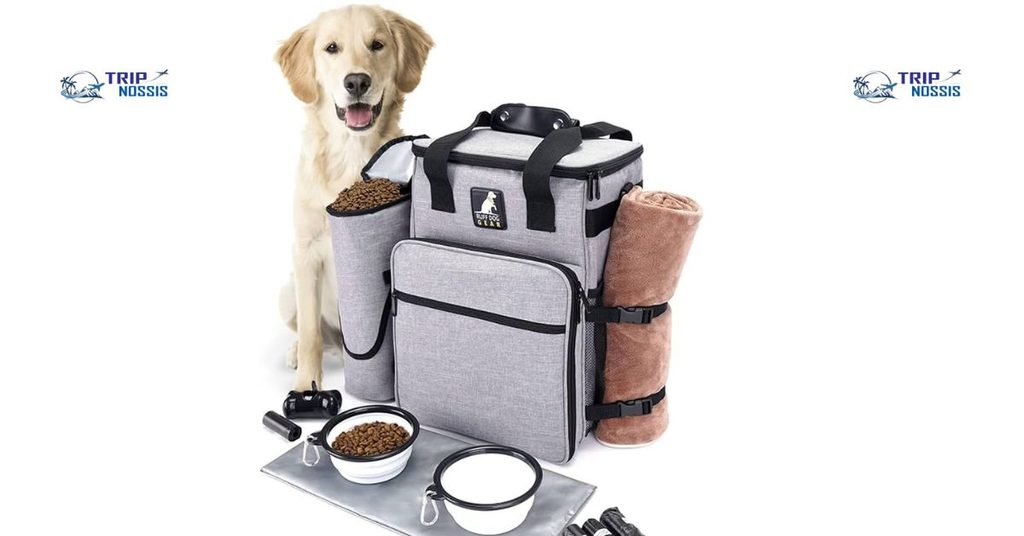
The right gear for a cross country road trip with a dog isn’t about buying everything available. It’s about covering four categories: restraint and safety, comfort, health and records, and day to day practicality.
For safety, a crash tested harness or a secured travel crate matters more than it might seem. In a sudden stop or a collision, an unrestrained dog becomes a projectile, and is also more likely to escape through a broken window or door afterward. Pair either option with a proper seat belt attachment or a crate that’s actually anchored, not just resting loose in the trunk or back seat.
For comfort, pack collapsible travel bowls, a favorite blanket or an item that smells like home, and a familiar toy or chew. A portable water jug is worth having beyond what you can buy along the way, since not every stop will have water available.
For health and records, bring a printed copy of vaccination records and any required health certificate, along with a basic pet first aid kit covering gauze, tweezers, antiseptic wipes, and a tick remover. If your dog takes regular medication, pack a few extra days’ supply beyond what the trip calendar suggests, in case of delays.
For everyday practicality, bring more waste bags than you think you’ll need, a standard leash rather than a retractable one for busy stops, and a recent photo of your dog saved on your phone in case you get separated at a crowded rest area. A GPS tracker on the collar is worth considering for dogs prone to bolting when startled by an unfamiliar environment.
Daily Safety Tips for the Road
A few habits make the biggest difference in how safe and comfortable a cross country road trip with a dog actually is, day to day.
Never leave a dog alone in a parked car, even for what feels like a quick errand. Temperatures inside a parked car can climb into dangerous territory within minutes, even with the windows cracked and even on a day that doesn’t feel especially hot outside.
Keep water and bathroom breaks on a predictable schedule rather than waiting until your dog seems uncomfortable, and avoid switching food brands right before or during the trip, since a sudden diet change is a common cause of stomach upset on the road. Check for ticks each evening, especially after any stop near tall grass or wooded areas.
Pay attention to how quickly conditions change across a single day’s drive. Leaving a hot, dry stretch of desert in the afternoon and arriving somewhere cold and elevated by evening is common on a cross country route, and it’s worth having layers or a blanket on hand for your dog just as you would for yourself. If your trip lands near a major holiday known for fireworks, plan lodging with that in mind, since an unfamiliar hotel room offers less of a sound buffer than home.
Handling a Veterinary Emergency on the Road
Before you leave, spend a little time identifying 24 hour emergency animal hospitals along your general route, not just near your final destination, and save a few numbers directly in your phone. Having this ready before you need it matters, since searching for an emergency vet while your dog is actively unwell is the worst possible time to start.
Keep printed or digital vaccination records accessible, so an unfamiliar vet can treat your dog quickly without repeating tests that have already been done. If you suspect your dog has ingested something toxic, the ASPCA Animal Poison Control Center is available around the clock at (888) 426 4435, though a consultation fee may apply.
If your dog isn’t already covered by pet insurance, it’s worth comparing a few providers before the trip rather than during it, since some offer coverage that can be useful for unexpected travel related vet visits. Symptoms like repeated vomiting, labored breathing, sudden severe lethargy, or suspected poisoning warrant an urgent vet visit rather than a wait and see approach. This article is meant as planning guidance, not a substitute for a veterinarian’s judgment on an actual medical situation.
Common Mistakes to Avoid on a Cross Country Road Trip With a Dog
- Waiting until the week before departure for the vet visit, which leaves no time to update vaccines or ask questions about the route.
- Introducing the travel crate or harness for the first time on the actual travel day instead of practicing beforehand.
- Booking non refundable lodging based on a hotel chain’s general pet policy without confirming the fee, size limit, and pet count directly with that specific location.
- Planning driving days around convenient mileage for the driver rather than realistic bathroom and stretch needs for the dog.
- Assuming a national park’s rules will match the last park you visited, instead of checking that specific park’s pet policy.
- Underestimating heat risk, since dogs cool far less efficiently than people and can overheat on a day that feels only mildly warm to a human.
- Assuming every gas station or rest stop will have water available for pets, since many don’t.
- Forgetting to pack enough waste bags, which turns into a recurring headache rather than a one time inconvenience.
Frequently Asked Questions
Can I take my dog on a cross country road trip?
Yes. A cross country road trip with my dog is realistic for most healthy dogs when the trip is paced around regular stops, proper identification, and a pre trip vet check rather than treated as a straight endurance drive.
How many hours a day should I drive with a dog in the car?
A common guideline is 6 to 8 hours of actual driving with a stop every two to three hours, which usually works out to roughly 300 to 400 miles a day at a comfortable pace, though this varies with your dog’s age, health, and tolerance for car travel.
Do I need a health certificate to cross state lines with my dog?
Often, yes. Most states require a Certificate of Veterinary Inspection for pets entering from out of state, typically issued within about 10 days of travel and confirming a current rabies vaccination, though requirements are set individually by each state, so it’s worth confirming directly with your destination state or your vet before you go.
Are dogs allowed in national parks?
Generally, yes, in developed areas like parking lots, campgrounds, and paved roads, but trail access is limited and varies significantly by park. Always check the specific park’s official pets page before you arrive rather than assuming access based on a different park.
What is the best time of year for a cross country road trip with a dog?
Spring and fall tend to offer the mildest temperatures across most of the country, avoiding both peak summer heat on southern routes and winter weather risk on northern ones. The right season also depends heavily on which corridor you’re driving, since a southern route and a northern route face very different seasonal risks.
How do I find pet friendly hotels along my route?
Start with hotel chains generally known for pet friendly policies, then confirm directly with the specific property regarding pet fees, weight limits, and how many pets are allowed, since individual locations can set their own rules even within a national chain.
What should I pack for a cross country road trip with my dog?
At minimum, a secured harness or crate, collapsible bowls, printed vaccination records, a basic pet first aid kit, extra waste bags, and any regular medication with a few extra days’ supply. A recent photo of your dog on your phone is a small but genuinely useful addition in case you get separated.
Is it safer to fly or drive cross country with a dog?
Each has different tradeoffs. Driving gives you more control over breaks, temperature, and pace but takes longer overall, while flying is faster but often means cargo transport for larger dogs, which carries its own risks and airline specific rules that should be checked directly with the airline before booking.
Getting Started
If a cross country road trip with a dog is on your calendar, the most useful first move is booking the vet visit, since everything else, from paperwork to medication timing, works backward from that appointment. From there, start mapping out pet friendly stops and lodging along your general corridor rather than leaving it for the drive itself, and run a few practice drives with the actual crate or harness you plan to use. The trip itself tends to go smoothly once the groundwork is handled well before departure.
If you have a pet, you can use our Pet Friendly Road Trip Planner to plan your trip