
Las Vegas might be famous for its glittering casinos and world-class entertainment, but some of the most breathtaking experiences await just beyond the neon lights. The city sits at the crossroads of some of the most spectacular natural wonders, historic landmarks, and diverse landscapes in the Southwest. Whether you’re craving dramatic desert vistas, towering red rock canyons, or even a coastal city adventure, incredible day trips from Vegas offer something for every type of traveler.
The beauty of using Las Vegas as your base camp is the sheer variety of destinations within reach. In just a few hours of driving, you can transition from the desert floor to alpine forests, from ancient petroglyphs to modern urban landscapes, from the lowest point in North America to canyon rim overlooks that will take your breath away. These adventures provide the perfect counterbalance to the sensory overload of the Strip, offering fresh air, stunning photography opportunities, and memories that last far longer than any casino jackpot.
This comprehensive guide explores the best day trips from Las Vegas NV, ranging from quick half-day escapes to ambitious full-day adventures that push the boundaries of what’s possible in 24 hours. We’ll cover everything from the famous national parks that draw millions of visitors annually to hidden gems that offer solitude and raw natural beauty. Each destination includes practical driving information, must-see highlights, and insider tips to help you make the most of your desert escape.
Why Vegas Is the Perfect Base for Unforgettable Day Trips
Desert Landscapes Within Easy Driving Distance
Las Vegas occupies a unique geographic position that makes it an ideal launching point for exploration. The city sits in the Mojave Desert, surrounded by mountain ranges and positioned within striking distance of multiple ecosystems and climate zones. This diversity means you can experience drastically different landscapes without traveling excessive distances.
Within a 30-mile radius, you’ll find red sandstone formations that glow like fire at sunset. Extend that to 50 miles, and you’re standing beside one of the world’s greatest engineering marvels. Push out to 120 miles, and you’re hiking among ancient Joshua trees or standing on the rim of one of the deepest canyons on Earth. Drive three hours in nearly any direction, and you’ll discover national parks, state parks, and natural wonders that would be bucket list destinations in their own right.
The road infrastructure around Las Vegas is excellent, with well-maintained highways radiating outward in every direction. Interstate 15 connects you to Utah’s mighty national parks to the northeast and Southern California’s cities and beaches to the southwest. Highway 95 opens up access to desert wilderness areas and historic mining towns. Route 160 and Highway 93 provide scenic alternatives that reveal the raw beauty of the high desert.
From Natural Wonders to Coastal Cities: Exploring the Southwest
The variety of day trips from Vegas by car extends far beyond desert landscapes. While the surrounding Mojave Desert offers incredible scenery, your options include everything from coastal urban adventures to alpine forests, from the hottest place on Earth to cool mountain retreats where temperatures can be 30 degrees lower than in the valley below.
California’s diverse attractions lie within reach, including the sprawling metropolis of Los Angeles with its beaches, museums, and entertainment districts. Utah’s mighty national parks showcase geology on a grand scale, with towering cliffs, narrow slot canyons, and rock formations sculpted over millions of years. Arizona’s Grand Canyon, one of the Seven Natural Wonders of the World, can be reached for an unforgettable day of rim-walking and photography.
The elevation changes you’ll experience on these drives create distinct ecological zones. You might start your morning in the desert heat of Las Vegas at 2,000 feet above sea level, then find yourself at 8,000 feet in pine forests by afternoon, where temperatures are pleasant even in midsummer. This elevation diversity not only provides climate relief during hot months but also creates stunning scenic variety as you drive through different biological communities.
Best National Park Day Trips from Las Vegas NV
Zion National Park Day Trip from Vegas: Red Rock Paradise
A Zion day trip from Vegas ranks among the most popular excursions for good reason. Located approximately 160 miles northeast of Las Vegas, this Utah gem showcases some of the most dramatic canyon scenery in the Southwest. The drive takes about 2.5 to 3 hours via Interstate 15, making it feasible as a long but rewarding day trip. However, an early start is essential to maximize your time in the park and experience its highlights before afternoon crowds peak.
The journey itself offers scenic value, particularly as you cross into Utah and begin seeing the red rock formations that characterize the region. The town of St. George makes a convenient pit stop roughly halfway through your drive, offering gas stations, restaurants, and a chance to stretch your legs before tackling the final hour to the park entrance.
Day trips from Vegas to Zion National Park should focus on the main canyon and its shuttle-accessible attractions. From April through October, private vehicles are not allowed in Zion Canyon, so you’ll park at the visitor center and board the free shuttle system that stops at all major trailheads and viewpoints. This restriction actually enhances the experience by reducing traffic and creating a more peaceful atmosphere in the canyon.
Must-see stops include the Court of the Patriarchs viewpoint, where three massive sandstone peaks tower above the canyon floor. The Emerald Pools trails offer options for all fitness levels, with the lower pool accessible via an easy paved path, while the upper pools require a moderate climb with some elevation gain. Weeping Rock features a short but steep trail to an alcove where water seeps through the sandstone, creating a hanging garden of ferns and wildflowers.
For adventurous hikers with time and energy, the Riverside Walk provides an easy stroll along the Virgin River to the gateway of The Narrows, one of the world’s most famous slot canyon hikes. While completing the full Narrows hike isn’t realistic on a day trip from Vegas, walking the first section gives you a taste of wading through the river between towering canyon walls.
The iconic Angels Landing trail presents a challenge for those seeking an adrenaline rush, but the 5 to 6-hour round trip time and permit requirement (now necessary due to high demand) make it difficult to fit into a day trip from Las Vegas. Scout Lookout, the viewpoint before the famous chain section, offers spectacular views and makes a worthy destination without requiring the permit or tackling the exposed final ridge.
Timing your Zion National Park day trip from Vegas requires strategic planning. Aim to arrive at the park by 9:00 AM to beat the worst crowds and secure parking at the visitor center. Spring (March through May) and fall (September through November) offer the best weather conditions, with comfortable temperatures and lower visitor numbers compared to summer. Winter visits are possible, but you may encounter snow at higher elevations and limited shuttle service.
Death Valley Day Trip from Las Vegas: America’s Hottest Destination
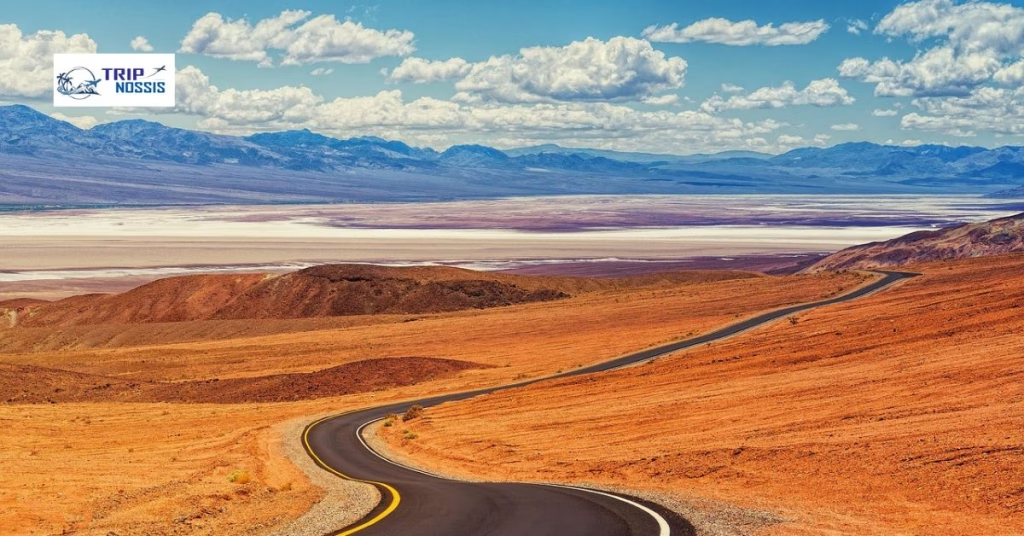
A death valley day trip from Las Vegas ventures into one of the most extreme and otherworldly landscapes on the planet. Located about 120 miles west of Las Vegas, Death Valley National Park holds the record for the hottest temperature ever reliably recorded on Earth and features the lowest elevation in North America. Despite its forbidding name, the park offers stunning scenery, fascinating geology, and remarkable biodiversity adapted to extreme conditions.
The drive to Death Valley takes approximately 2 to 2.5 hours via Highway 95 and Route 373, or alternatively through Pahrump on Route 160. Both routes offer scenic desert vistas, with the highway cutting through open basins surrounded by distant mountain ranges. The approach to the park builds anticipation as you begin descending into the valley itself, with the landscape becoming increasingly stark and dramatic.
A day trip to death valley from las vegas should prioritize the main attractions clustered along Badwater Road and the central valley. Start at the Furnace Creek Visitor Center to get oriented, check current conditions, and understand the park’s unique geology. Rangers can provide valuable advice on which areas offer the best conditions on your visit date.
Zabriskie Point makes an essential first stop, offering panoramic views across badlands eroded into otherworldly formations. The viewpoint is accessible via a short walk from the parking area, and the golden light of early morning creates stunning photography opportunities. The layered, multicolored sediments tell the story of ancient lakes that once filled this valley millions of years ago.
Badwater Basin, at 282 feet below sea level, represents the lowest point in North America and features a vast salt flat that stretches for miles. Walk out onto the bright white hexagonal salt patterns for a surreal experience and perspective-bending photographs. Look up at the cliff face to spot the sea level sign mounted high above, illustrating just how far below the ocean you’re standing.
Artist’s Drive offers a one-way scenic loop through hills painted with brilliant colors created by oxidized metals in the rocks. The palette ranges from deep reds and vibrant greens to soft pinks and golden yellows. Artist’s Palette, the most famous viewpoint along this drive, looks especially vivid in the late afternoon light.
The Mesquite Flat Sand Dunes near Stovepipe Wells provide the classic Death Valley experience. These accessible dunes allow you to walk out into the sand sea, with no marked trails; you simply follow your instincts across the rippled surface. Sunrise and sunset transform the dunes into a photographer’s paradise, with dramatic shadows accentuating every curve and ripple.
Death valley from las vegas day trip planning must account for extreme heat during summer months. From June through September, temperatures regularly exceed 120°F, making outdoor activities dangerous or impossible during midday hours. If visiting during this period, start extremely early (departing Vegas by 5:00 AM), focus on lower elevation areas in early morning, then retreat to air-conditioned facilities or higher elevations by 10:00 AM.
Fall through spring offers more comfortable conditions, with winter and early spring being particularly pleasant. November through March provides ideal temperatures for hiking and exploration, though nights can be quite cold. Spring occasionally brings wildflower blooms that transform the desert into a carpet of color, typically peaking in March or April following wet winters.
Essential items for any death valley day trip from las vegas include far more water than you think you’ll need (at least one gallon per person), sun protection (sunscreen, hat, sunglasses), salty snacks to replace electrolytes, and a full tank of gas. Cell phone service is extremely limited or nonexistent throughout most of the park, so download offline maps and inform someone of your plans before entering the park.
Valley of Fire Day Trip from Las Vegas: Ancient Petroglyphs and Fire Red Rocks
A valley of fire day trip from las vegas offers the perfect combination of stunning scenery and convenience. Located just 50 miles northeast of Las Vegas, this state park features some of the most vibrant red sandstone formations in the Southwest, along with ancient petroglyphs created by the area’s indigenous peoples thousands of years ago. The proximity makes it ideal for a half-day excursion or a leisurely full-day exploration without the long drives required for more distant destinations.
The route to Valley of Fire follows Interstate 15 north toward Mesquite, then exits onto Valley of Fire Highway for the final scenic approach. The drive takes about one hour from the Strip, making it one of the most accessible natural attractions near Las Vegas. As you approach the park, the red rocks become increasingly visible, creating anticipation for the spectacular formations awaiting inside the park boundaries.
Valley of Fire’s name becomes obvious as you drive through the park, especially during golden hour when the red Aztec sandstone appears to glow like burning embers. These formations, created from ancient sand dunes that lithified into rock approximately 150 million years ago, have been sculpted by wind and water into dramatic shapes including arches, balanced rocks, and beehive formations.
The park’s visitor center provides excellent context about the area’s geology, ecology, and human history. Rangers offer helpful advice about current trail conditions and can direct you to the best petroglyphs sites. The center also features displays about the desert wildlife that calls this harsh environment home, from desert bighorn sheep to rattlesnakes and chuckwallas.
Atlatl Rock features one of the park’s most accessible and impressive petroglyph panels, accessible via a metal staircase built into the rock face. The ancient rock art includes depictions of atlatls (throwing spears used before the bow and arrow), bighorn sheep, and various geometric designs created by the Anasazi people. Information panels help interpret the symbols and explain their possible meanings.
The Fire Wave trail has become increasingly popular thanks to social media, showcasing swirling red and white striped sandstone formations that create a wave-like appearance. The hike is moderate, about 1.5 miles round trip, crossing open desert before reaching the main attraction. Visit early morning or late afternoon to avoid harsh midday light and heat while capturing the best photographs.
Mouse’s Tank Trail leads through a scenic canyon to a natural basin that collects water after rainstorms. The easy one mile round trip hike passes numerous petroglyph panels along the canyon walls, offering glimpses into the artistic traditions of the area’s ancient inhabitants. The trail name comes from a Paiute renegade named Mouse who used this area as a hideout in the 1890s.
White Domes Loop offers a 1.1-mile trail that showcases the park’s diversity, including colorful rock formations, a slot canyon section, and remnants of a 1960s movie set. This short but scenic hike provides an excellent introduction to the park’s geology and makes an ideal choice for families with children or anyone seeking a quick but rewarding walk.
Short day trips from Las Vegas don’t get much better than Valley of Fire. The compact nature of the park means you can see major highlights in just 3 to 4 hours, or extend your visit to a full day by adding more trails and exploring every viewpoint along the scenic drives. Two main roads loop through the park, with numerous pullouts allowing you to stop and photograph formations that catch your eye.
The best times to visit Valley of Fire are October through April, when temperatures are comfortable for hiking and exploring. Summer temperatures regularly exceed 110°F, making midday visits extremely uncomfortable. If visiting during summer months, arrive at sunrise and complete your hiking before 10:00 AM, then enjoy scenic drives with the air conditioning running.
Grand Canyon: The Classic Southwest Day Trip
No discussion of day trips from vegas would be complete without mentioning the Grand Canyon, though the distance and drive time make this an ambitious undertaking. The South Rim, the most visited section of the canyon, lies approximately 275 miles from Las Vegas, requiring 4 to 4.5 hours of driving each way. The West Rim, home to the famous Skywalk, sits closer at about 130 miles and 2.5 hours, though this area lies outside the national park boundaries on Hualapai tribal land.
For those committed to visiting the South Rim in a single day, departing Las Vegas by 5:00 AM is essential to maximize your time at the canyon. The route follows Highway 93 south across Hoover Dam, then connects to Interstate 40 east before turning north on Highway 64 into the park. The long drive crosses varied landscapes, from Mojave Desert through high desert grasslands and into the ponderosa pine forests surrounding the canyon rim.
Upon arrival at Grand Canyon National Park’s South Rim, head directly to one of the main viewpoints like Mather Point or Yavapai Point to get your first breathtaking view into the mile-deep chasm. The visitor center near Mather Point provides context about the canyon’s formation, geology, and human history. From March through November, free shuttle buses operate along the rim, allowing you to park once and visit multiple viewpoints without driving.
The Rim Trail offers opportunities to walk along the canyon edge between viewpoints, with paved sections accessible to everyone and more rugged stretches for those seeking a bit of adventure. Even a short walk of half a mile provides changing perspectives and quieter spots away from the main overlooks. Desert View Drive extends east from the main village area, offering additional viewpoints and culminating at Desert View Watchtower, a historic stone structure with panoramic views.
The West Rim at Grand Canyon West presents an alternative requiring less driving time, though opinions vary about whether it matches the grandeur of the national park areas. The Skywalk, a glass-bottomed bridge extending over the canyon, offers a unique perspective and photographic opportunity. Eagle Point and Guano Point provide additional viewpoints along the rim, with helicopter and boat tour options available.
Helicopter tours departing from Las Vegas offer another way to experience the Grand Canyon without the extensive driving, typically including aerial views of the canyon and sometimes landing at the bottom for a champagne toast. While expensive, these tours compress the experience into a half-day format and provide perspectives impossible to achieve from the rim.
Day Trips from Vegas to California: Beaches, Cities & Desert Oases
Day Trip to Los Angeles from Vegas: Urban Adventure
A day trip to los angeles from vegas represents one of the more ambitious undertakings, covering approximately 270 miles and requiring 4 to 5 hours of driving each way under ideal traffic conditions. However, for those craving urban energy, world-class museums, iconic beaches, or theme park thrills, the journey offers access to endless entertainment and cultural experiences completely different from Las Vegas’s offerings.
The most direct route follows Interstate 15 southwest through the Mojave Desert, passing through Barstow before climbing over Cajon Pass and descending into the sprawling Los Angeles basin. The drive reveals dramatic elevation changes and landscape transitions, from desert valleys to mountain passes to urban sprawl. Weekend traffic, particularly Sunday evenings heading back toward Las Vegas, can add significant time to the return journey.
Day trips from vegas to california focused on Los Angeles require strategic planning to avoid wasting precious hours in legendary traffic. Departing Las Vegas by 5:00 or 6:00 AM allows you to reach LA by mid-morning, beating the worst rush hour congestion. Having a focused plan about which specific area or attractions you’ll visit prevents wasting time driving between distant neighborhoods in this vast metropolitan region.
Santa Monica and Venice Beach offer the quintessential Southern California beach experience, with the iconic Santa Monica Pier providing amusement park rides, arcade games, and ocean views. The beachfront path connecting these communities invites leisurely walks or bike rides past street performers, bodybuilders, and sun worshippers. Third Street Promenade in Santa Monica features shopping and dining in a pedestrian-friendly environment.
Hollywood attractions cluster around Hollywood Boulevard, where the Walk of Fame displays stars honoring entertainment industry legends. The TCL Chinese Theatre showcases elaborate architecture and hosts movie premieres, with forecourt handprints and footprints from celebrities dating back decades. The nearby Hollywood Sign offers photo opportunities from various viewpoints around Griffith Park, with hiking trails leading to closer perspectives for the energetic.
Beverly Hills shopping along Rodeo Drive provides window-shopping opportunities among luxury boutiques, even if your budget doesn’t stretch to designer purchases. The contrast between Beverly Hills’ manicured perfection and the edgier, more artistic neighborhoods like Silver Lake or Echo Park illustrates LA’s diversity.
Cultural institutions like The Getty Center offer world-class art collections, stunning architecture, and panoramic city views, all with free admission (parking fees apply). LACMA (Los Angeles County Museum of Art) features impressive collections spanning millennia and cultures, plus Instagram-famous installations like Urban Light with its forest of historic street lamps.
For theme park enthusiasts, Universal Studios Hollywood provides behind-the-scenes studio tours, thrilling rides, and immersive experiences based on blockbuster franchises. Arriving when the park opens maximizes ride time before crowds build. Disneyland in Anaheim, while slightly farther from the main city, represents another iconic option for a theme park-focused day trip.
The return journey to Las Vegas requires patience and realistic time expectations. Sunday evening traffic heading back to Vegas can be substantial, as weekend visitors return home. Factoring in dinner before departing gives traffic time to clear and provides needed rest after a long day of urban exploration.
Joshua Tree National Park: Otherworldly Desert Landscapes
Joshua Tree National Park sits approximately 175 miles southwest of Las Vegas, requiring about 2.5 to 3 hours of driving via Highway 95 south and connecting roads. This unique desert park features the whimsical Joshua trees that give it its name, massive granite rock formations popular with climbers, and the junction of two distinct desert ecosystems. The combination of distinctive vegetation and bizarre rock formations creates landscapes that feel almost alien.
The Joshua tree, actually a species of yucca rather than a true tree, grows only in the Mojave Desert within a narrow elevation range. These prehistoric-looking plants can live for hundreds of years and reach heights of 40 feet, their twisted branches creating sculptural forms against blue skies. Early Mormon settlers thought the trees’ outstretched branches resembled the Biblical prophet Joshua reaching toward heaven, giving the plants and later the park their evocative name.
Rock formations throughout Joshua Tree resulted from underground volcanic activity, erosion, and the action of water over millions of years. Massive granite monoliths balanced precariously atop one another create natural sculptures, while boulder piles offer endless exploration opportunities. Rock climbers from around the world come to test their skills on the park’s estimated 8,000 climbing routes, making it one of the premier climbing destinations in the country.
The park features several distinct areas, each offering different experiences. The western section sits in the higher-elevation Mojave Desert, where Joshua trees thrive alongside prickly pear cactus and other vegetation. The eastern section transitions into the lower Colorado Desert, characterized by creosote bush scrubland and more sparse vegetation. Keys View, accessed via a short drive from the main park road, offers sweeping panoramas across the Coachella Valley and San Andreas Fault.
Hiking trails range from short nature walks to challenging backcountry routes. The Hidden Valley loop takes you through a natural amphitheater surrounded by rock formations, following an easy one-mile trail suitable for most fitness levels. Skull Rock offers quirky photo opportunities with a boulder formation resembling a human skull. Barker Dam, a 1.3-mile loop, leads to a small reservoir where you might spot wildlife coming to drink, especially in the cooler hours.
Combining Joshua Tree with nearby Palm Springs creates a more diverse day trip. The town offers mid-century modern architecture, trendy restaurants, and the Aerial Tramway, which climbs from the desert floor to pine forests at 8,500 feet in rotating cable cars. This elevation change creates a dramatic temperature drop, offering relief during hot months.
Best visiting times for Joshua Tree are fall through spring, with March and April bringing wildflower blooms in years with adequate winter rainfall. Summer temperatures regularly exceed 100°F, making hiking uncomfortable or dangerous during midday hours. Winter can be surprisingly cold, especially at higher elevations, occasionally bringing snow to the higher sections of the park.
Mojave National Preserve: Off the Beaten Path Desert Beauty
Mojave National Preserve offers a less-crowded alternative to more famous desert destinations, covering 1.6 million acres of wilderness between Las Vegas and Barstow. Located about 90 miles south of Las Vegas via Interstate 15, this preserve protects a diverse landscape of sand dunes, volcanic cinder cones, Joshua tree forests, and rugged mountain ranges. The relative lack of visitors compared to national parks means you’ll often have trails and viewpoints to yourself.
Kelso Dunes rise as one of the preserve’s signature attractions, forming the third-tallest dune field in the country. The dunes reach heights of 650 feet and cover 45 square miles, creating an impressive sand sea in the middle of the desert. Hiking to the top of the highest dunes requires soft-sand slogging that burns your calves, but the summit views across the preserve and surrounding mountains reward the effort. Under the right conditions, the sand produces a booming or singing sound when disturbed, a phenomenon caused by the specific grain size and moisture content.
The Kelso Depot Visitor Center occupies a beautifully restored 1924 railroad station, now serving as the preserve’s main information hub. The Spanish Colonial Revival building houses exhibits about the area’s railroad history, mining heritage, and natural history. Rangers provide advice about current road conditions and recommend routes based on your vehicle type and time constraints.
Cinder Cone National Natural Landmark features a symmetrical volcanic cone rising 700 feet above the surrounding plain. A trail climbs to the crater rim, where you can peer into the bowl-shaped depression and examine the dark volcanic rock. The entire area shows evidence of volcanic activity, with lava flows, cinder deposits, and other volcanic features creating a stark landscape unlike anywhere else in the region.
Hole-in-the-Wall offers fascinating geology and a short ring trail that passes through narrow rock passages formed by volcanic tuff. Metal rings bolted into the rock provide hand-holds for navigating the steepest sections, giving this easy hike an adventurous feel. The area takes its name from the holes weathered into the rock faces, created by gas bubbles trapped in the volcanic material before it cooled.
Mitchell Caverns, located in the Providence Mountains section of the preserve, feature limestone caves decorated with stalactites, stalagmites, and other formations. Ranger-led tours were previously available but have been suspended; check current status before planning a visit focused on the caverns. Even without cave access, the scenic drive to this area and views from the visitor center justify the side trip.
Road conditions in Mojave National Preserve vary significantly. Main routes like Kelso Cima Road are paved and suitable for any vehicle, while many side roads require high clearance or four-wheel drive. Always check current conditions at the visitor center before attempting unmaintained roads, especially after rain when flash flood damage can make routes impassable.
Half Day Trips from Las Vegas: Quick Escapes
Red Rock Canyon: Stunning Views Just Minutes from the Strip
Red Rock Canyon National Conservation Area stands as the most accessible natural attraction near Las Vegas, located just 15 miles west of the Strip via Charleston Boulevard. This proximity makes it perfect for half day trips from las vegas, whether you want a morning escape before afternoon commitments or an evening sunset drive. The dramatic red and cream-colored sandstone formations, rising 3,000 feet above the valley floor, provide a stunning counterpoint to the city’s artificial glitter.
The 13-mile scenic loop drive represents the main attraction, a one-way route that winds through the conservation area with numerous pullouts for photographs and trailhead access. The drive takes 30 to 45 minutes without stops, but most visitors spend 2 to 3 hours exploring viewpoints and taking short walks. An entrance fee is required, with timed entry reservations recommended during peak seasons to manage visitor numbers and ensure parking availability.
Calico Hills offer some of the most vivid colors in the conservation area, with swirling patterns of red, pink, and white sandstone creating a painter’s palette effect. These formations are especially photogenic in the morning light when the low sun angle emphasizes textures and colors. Several short trails wind through this area, including routes into narrow canyons between the colorful outcrops.
Hiking options range from easy nature walks to strenuous summit climbs. The Calico Tanks trail, a 2.5-mile moderate hike, leads to natural water tanks where desert wildlife comes to drink, with panoramic views over Las Vegas as a bonus. Ice Box Canyon features a shaded slot canyon with seasonal waterfalls, offering cool respite during hot months. Turtlehead Peak and Bridge Mountain challenge experienced hikers with steep elevation gain and spectacular summit views.
Rock climbing opportunities abound throughout Red Rock, with routes for all skill levels. Climb areas like Sandstone Quarry attract beginners and experts alike, while longer multi-pitch routes scale the main escarpment faces. If you’re not a climber yourself, watching experts navigate these vertical puzzles provides free entertainment at popular crags.
The visitor center offers exhibits about the area’s geology, plants, and wildlife, plus a store selling books, maps, and souvenirs. Rangers provide information about current trail conditions and wildlife sightings. The center also explains how these spectacular formations developed over millions of years from ancient sand dunes that lithified into stone.
Wildlife viewing opportunities include wild burros descended from mining-era pack animals, bighorn sheep navigating impossibly steep cliff faces, and numerous bird species. Spring brings desert wildflower blooms, with prickly pear cactus producing brilliant yellow and pink flowers. Fall offers comfortable temperatures and migrating birds, while winter occasionally dusts the high peaks with snow for dramatic photographic opportunities.
Half day trips from las vegas to Red Rock work best early morning or late afternoon. Arriving at sunrise provides the best light for photography, minimal crowds, and comfortable temperatures even in summer. Sunset creates equally dramatic lighting and beautiful conditions for an evening drive, though the west-facing orientation means you’ll be driving into the sun for portions of the loop.
Hoover Dam: Engineering Marvel and Lake Mead Views
Hoover Dam, one of America’s greatest engineering achievements, sits just 30 miles southeast of Las Vegas at the Arizona-Nevada border. This Art Deco concrete colossus rises 726 feet above the Colorado River, holding back Lake Mead and generating hydroelectric power for three states. The short distance makes it ideal for half-day trips from las vegas, offering a fascinating blend of human ingenuity and scenic desert landscapes.
The drive to Hoover Dam follows Highway 93, which crosses the dam itself (though trucks and trailers must use the bypass bridge). Approaching from Nevada, the road descends into Black Canyon, where walls of dark volcanic rock rise on both sides. The dam comes into view gradually as you navigate the winding road, building anticipation for the full reveal.
Two parking areas serve visitors, one on the Nevada side and another on the Arizona side. The Nevada parking area provides easier access to the visitor center and dam tours, while the Arizona side offers better angles for photographs. Parking fills quickly during peak hours, especially in the comfortable temperatures of spring and fall, so arriving early morning or late afternoon improves your chances of finding a spot.
The visitor center presents exhibits about the dam’s construction, the hardships faced by workers during the Depression-era project, and the engineering challenges overcome. Video presentations explain the dam’s continued importance for water supply and power generation across the Southwest. The museum quality displays include original construction equipment, historical photographs, and interactive exhibits about hydroelectric power.
Dam tours provide closer looks at the massive structure’s inner workings. The Powerplant Tour takes you into the generators and explains electricity production, while the Dam Tour ventures deeper into the structure’s galleries and tunnels. Tours must be booked in advance, especially during busy seasons, and require passing through airport-style security screening.
Walking across the dam top offers free access to incredible views and allows you to stand on the Nevada-Arizona border, with one foot in each state. Information plaques explain construction facts and methods. The winged figures of the Republic sculptures anchor the dam’s Nevada side, representing the dignity of labor and showcasing the Art Deco design aesthetic incorporated throughout the structure.
The Mike O’Callaghan-Pat Tillman Memorial Bridge provides another perspective, arching 890 feet above the Colorado River downstream from the dam. A pedestrian walkway allows you to walk out onto the bridge for spectacular views of the dam, Black Canyon, and Lake Mead. The engineering required to construct this bridge in such a challenging location rivals the dam itself.
Lake Mead National Recreation Area extends for miles beyond the dam, offering boating, fishing, swimming, and hiking opportunities. Several marinas provide boat rentals and services, while beaches like Boulder Beach invite swimming and sunbathing. The lakeshore road provides scenic drives with pullouts for photographs and beach access.
Combining Hoover Dam with nearby attractions extends a half day into a full day adventure. The Lake Mead Historic Railroad Trail follows the old railroad bed that transported supplies during dam construction, now converted to a family-friendly walking and biking path. Five tunnels carved through the rock walls add interest to this easy, mostly flat route offering Lake Mead views.
Seven Magic Mountains: Colorful Desert Art Installation
Seven Magic Mountains stands as one of the most photographed art installations near Las Vegas, featuring seven towering stacks of brightly painted boulders rising from the desert floor. Located about 10 miles south of the city along Interstate 15, this public art piece by Swiss artist Ugo Rondinone creates a surreal contrast between vibrant neon colors and the muted desert landscape. The installation makes an ideal quick stop for short day trips from las vegas or as an addition to longer adventures heading south.
The installation consists of limestone boulders stacked 30 to 35 feet high, with each rock painted in intense fluorescent hues: magenta, blue, yellow, orange, green, and other brilliant shades. The totems stand apart from each other across an open desert plain, visible from the interstate and accessible via a short dirt road. The contrast between these vivid vertical elements and the horizontal desert creates the visual impact Rondinone intended, representing the meeting of human and nature.
Originally planned as a temporary installation running from 2016 to 2018, Seven Magic Mountains proved so popular that its display has been extended multiple times, currently scheduled through 2027. The remote desert location was chosen specifically to explore the relationship between natural and artificial, creating what the artist calls “a creative critique of the simulacra of Las Vegas.”
Photography opportunities abound, with the colorful towers providing dramatic subjects against blue skies or desert sunsets. The best lighting occurs during golden hour, roughly the first hour after sunrise or the last hour before sunset, when warm light enhances the colors and creates long shadows. Midday harsh light can wash out colors and create unflattering shadows, though dramatic clouds can partially mitigate this effect.
Visiting requires no special planning or fees, though parking can be limited during busy periods. A small gravel parking area accommodates about 20 vehicles, with overflow parking along the roadside when necessary. The site lacks facilities like restrooms or shade structures, so plan accordingly. Walking from the parking area to the installations covers flat, open ground across about 100 yards.
Combining Seven Magic Mountains with other southern destinations creates a fuller day trip. The installation sits along the route to Jean, Primm, and eventually Los Angeles or the Mojave National Preserve, making it a natural stopping point for longer journeys. Death Valley and Pahrump also lie in the same general direction, allowing you to see the art installation as part of a larger itinerary.
Respect for the installation means observing posted rules about not climbing on the towers, despite temptation to get closer or touch the painted surfaces. The boulders are carefully balanced and could shift if disturbed, creating danger for vandals and subsequent visitors. Staying on designated paths helps preserve the desert environment surrounding the installation.
Multi-Day Road Trip Itineraries Starting from Las Vegas
3 Day Road Trip from Las Vegas: Desert Loop Adventure
A 3 day road trip from las vegas allows you to connect multiple premier destinations into a comprehensive desert adventure, experiencing the region’s diverse landscapes without the rushed feeling of trying to accomplish everything in single-day pushes. This timeframe provides enough flexibility to really explore each location, take your time with hikes and photography, and enjoy the journey rather than treating it as a checklist race.
A popular three-day loop connects Valley of Fire, Zion National Park, and Bryce Canyon National Park, creating a progression through increasingly dramatic landscapes. Day one focuses on Valley of Fire State Park, where you can thoroughly explore all the trails, petroglyphs, and scenic drives without time pressure. After lunch, continue north through Mesquite to St. George, Utah, positioning yourself for an early start at Zion the next morning.
Day two begins with an early entry into Zion National Park, beating the crowds to tackle a major hike like Angels Landing (permit required) or The Narrows. Spending the full day allows you to ride the shuttle to all viewpoints, take multiple shorter hikes, and experience the park at different light conditions from morning through late afternoon. Overnight in Springdale just outside the park entrance or continue to nearby Kanab, positioning yourself for day three.
Day three explores Bryce Canyon National Park, about 90 minutes from Zion via spectacular scenic highways. Bryce’s famous amphitheater filled with orange and pink hoodoos creates one of the most unique landscapes in the world. The rim trail provides easy walkingwith constantly changing perspectives, while trails like Navajo Loop or Queens Garden descend into the hoodoo forest for an immersive experience among the towering rock spires. After exploring Bryce, the return drive to Las Vegas via Highway 89 and Interstate 15 takes about 4 hours, completing your loop.
Alternative three-day itineraries might focus on California destinations, combining Death Valley, Joshua Tree, and a night in Palm Springs for a desert-to-resort experience. Another option explores Arizona, with stops at the Grand Canyon South Rim, Sedona’s red rocks, and historic Route 66 towns. The key to successful multi-day trips is balancing driving time with exploration time, ensuring you don’t spend the entire trip behind the wheel.
Accommodation planning for a 3 day road trip from las vegas requires advance booking during peak seasons, especially in gateway towns near major parks. Springdale near Zion, towns around Bryce Canyon, and communities near the Grand Canyon book up months ahead for summer and fall visits. Off-season travel provides more flexibility and often better rates, though some services may have reduced hours.
Packing for multi-day adventures differs from day trips, requiring changes of clothes, toiletries, and potentially camping gear if you prefer that approach. Many travelers pack a cooler with drinks and snacks to save money and time, avoiding the need to stop at restaurants for every meal. Having supplies readily available also provides flexibility to stop at scenic pullouts for impromptu picnics.
Budget considerations for three-day trips include hotel costs, gas, park entrance fees, and meals. Many national parks offer annual passes that cover entrance fees for a full year, potentially saving money even on a single multi-park trip if you’re visiting several fee areas. Camping provides the most economical lodging option, with national park and state park campgrounds typically costing $15 to $30 per night compared to $100 to $300 for hotel rooms.
5 Day National Park Road Trip from Las Vegas: The Ultimate Southwest Tour
A 5 day national park road trip from las vegas opens up the possibility of tackling the famous Grand Circle route, an epic loop connecting some of America’s most spectacular national parks and monuments. This extended timeframe allows you to visit Zion, Bryce Canyon, Capitol Reef, Arches, Canyonlands, Monument Valley, and the Grand Canyon, experiencing the full diversity of Colorado Plateau geology and landscapes.
Day one covers the drive to Zion National Park with a full afternoon and evening of exploration. Arriving in the afternoon allows you to ride the shuttle to viewpoints and complete a moderate hike before sunset paints the canyon walls in golden light. Overnight in Springdale or nearby Hurricane positions you for day two.
Day two explores more of Zion in the morning, perhaps tackling The Narrows or repeating favorite spots from the previous day. After lunch, drive to Bryce Canyon, about 90 minutes away through stunning high country. The elevation at Bryce reaches over 8,000 feet, creating cooler temperatures and pine forest ecosystems. Explore the rim and perhaps descend into the hoodoos before sunset creates magical lighting. Overnight near Bryce Canyon.
Day three ventures to Capitol Reef National Park, the least visited of Utah’s “Mighty Five” national parks but equally spectacular. The Waterpocket Fold, a 100-mile-long wrinkle in the earth’s crust, creates dramatic cliffs, canyons, and colorful rock layers. Historic orchards planted by Mormon settlers still produce fruit available for picking in season. Continue to Moab in the afternoon, positioning yourself centrally for two parks. Moab offers numerous hotels, restaurants, and outdoor shops.
Day four focuses on Arches National Park in the morning, home to more than 2,000 natural stone arches including the iconic Delicate Arch. The park’s compact nature allows you to visit many highlights in a half day. After lunch, explore Canyonlands National Park’s Island in the Sky district, where you can peer into the Colorado River canyon from multiple overlooks. The scale of Canyonlands staggers the imagination, with vast canyons stretching to distant horizons. Return to Moab for the night.
Day five includes an optional early morning detour to Monument Valley, about 2.5 hours south of Moab, where massive sandstone buttes rising from the valley floor have starred in countless Western films. The tribal park loop drive takes 2 to 3 hours and provides iconic Southwest photography. From Monument Valley or directly from Moab, the route swings west to the Grand Canyon’s South Rim, about 3.5 to 4.5 hours depending on your starting point. Spend the afternoon and evening at the canyon before overnighting at the rim or in nearby Flagstaff or Williams.
The final day involves the 4 to 5-hour drive back to Las Vegas, perhaps stopping at Route 66 historic sites or Hoover Dam along the way. This completes an approximately 1,000-mile loop showcasing the Southwest’s greatest hits. The drives between parks offer scenic value themselves, passing through desert valleys, over mountain passes, and across high plateaus where views stretch for dozens of miles.
Variations on the five-day grand circle might include replacing some Utah parks with Sedona, Arizona for its famous red rock landscapes and New Age energy. Another alternative adds Mesa Verde National Park in Colorado, featuring remarkable cliff dwellings constructed by ancestral Puebloans. Page, Arizona makes another worthy stop, offering access to Antelope Canyon, Horseshoe Bend, and Lake Powell.
Physical demands of ambitious multi-day road trips shouldn’t be underestimated. Long driving days combined with hiking in desert heat at high elevations can exhaust even fit travelers. Building in some flexibility allows you to adjust plans if weather turns bad, if you’re more tired than expected, or if you discover a place you want to explore more deeply. Some travelers prefer a more relaxed pace, choosing three or four parks rather than attempting to see everything.
RV rentals provide an alternative to hotel hopping, allowing you to camp in national park campgrounds or commercial RV parks. This approach offers convenience and potential cost savings, though RV rental and gas costs can be substantial. Campground reservations are essential during peak seasons, as popular park campgrounds fill up months in advance.
Planning Your Day Trip from Vegas by Car: Essential Tips

Best Times to Visit Each Destination
Timing your day trip from vegas dramatically impacts your experience, as desert destinations face extreme temperature swings seasonally and even between day and night. Understanding the best visiting windows for each location helps you avoid miserable conditions and crowded peak seasons while maximizing opportunities for comfortable exploration and great photography.
Spring, specifically March through May, represents the sweet spot for most desert destinations near Las Vegas. Temperatures are moderate, typically ranging from the 60s to 80s during the day, making hiking and outdoor activities pleasant. Wildflowers bloom across the desert during March and April in years with adequate winter rainfall, transforming normally stark landscapes into carpets of yellow, purple, and pink. Spring break crowds descend during March, but visiting on weekdays helps avoid the worst congestion.
Fall, from September through November, provides another excellent window. September often retains summer heat, but October and November offer near-perfect conditions for exploration. Fall colors appear in higher elevations and riparian areas, though the desert itself doesn’t undergo dramatic seasonal changes. Major holidays like Thanksgiving bring crowds, but most fall weekends remain manageable.
Summer, June through August, presents significant challenges for day trips from vegas by car to desert destinations. Death Valley becomes dangerously hot, regularly exceeding 120°F and sometimes approaching or surpassing the world record temperature. Even seemingly moderate destinations like Red Rock Canyon reach uncomfortable temperatures above 110°F by afternoon. Higher elevation locations like Zion, Bryce Canyon, and the Grand Canyon’s North Rim offer relief from valley heat, though midday temperatures still climb into the 90s. If visiting summer destinations, extremely early starts are essential, with dawn departures allowing you to complete hikes before midday heat peaks.
Winter, December through February, brings cold temperatures and potential snow to higher elevations. Zion and the Grand Canyon South Rim remain accessible, though trails may have ice requiring traction devices. Bryce Canyon receives substantial snow, creating beautiful winter landscapes but requiring winter tires or chains for safe driving. Death Valley becomes perfectly pleasant in winter, with daytime temperatures in the 60s and 70s ideal for hiking. Winter also brings the smallest crowds, as most visitors prefer spring and fall conditions.
Shoulder seasons offer the best value, with lower accommodation prices and reduced crowds compared to peak spring and fall periods. Late February and early March, or late November into December, provide opportunities to visit popular destinations without the crowds while still enjoying reasonable weather.
Specific destination timing varies based on elevation and latitude. Death Valley is best November through March, with January and February offering ideal conditions. Zion shines in April, May, September, and October, though every season has merit. Valley of Fire works well nearly year-round for morning visits, though summer afternoons are brutally hot. Joshua Tree is perfect March through May and October through November, while summer is tolerable only for early morning visits.
What to Pack for Desert Day Trips
Proper packing transforms a potentially miserable desert experience into a comfortable adventure. Desert environments create unique challenges, from extreme temperature swings to intense sun exposure to limited services in remote areas. Having the right supplies ensures safety and comfort while avoiding the need to cut trips short due to preventable problems.
Water stands as the absolute most critical item for any desert excursion. The dry air and often hot temperatures cause rapid dehydration, even when you don’t feel particularly thirsty. Plan for at least one gallon per person for a full day trip, more if hiking or visiting during summer. Insulated bottles or coolers keep water cool longer, making it more pleasant to drink and encouraging adequate hydration. Sports drinks or electrolyte tablets help replace salts lost through sweating during strenuous activities.
Sun protection deserves equal priority, as the desert sun can cause burns within minutes of exposure. High SPF sunscreen should be applied before leaving your hotel and reapplied every two hours, more frequently if sweating heavily. A wide-brimmed hat provides crucial shade for your face, neck, and ears. Sunglasses with UV protection prevent eye damage and reduce squinting in bright conditions. Long-sleeved, lightweight, light-colored shirts offer better sun protection than short sleeves without causing overheating, as many desert peoples have known for millennia.
Layered clothing accommodates dramatic temperature swings common in desert environments. Mornings often start chilly, especially in winter or at higher elevations, requiring a jacket or fleece. By midday, temperatures may climb 30 to 40 degrees, making shorts and a t-shirt more appropriate. Evenings cool off again, sometimes dramatically. Having layers easily accessible in your vehicle allows you to adjust clothing as conditions change throughout the day.
Proper footwear makes the difference between enjoying trails and suffering through them. Hiking boots or trail shoes with good tread provide ankle support and traction on rocky, uneven terrain common throughout desert parks. Breaking in new footwear before your trip prevents blisters that could ruin your experience. Sandals work for short walks and scenic drives but don’t provide adequate protection or support for actual hiking.
Navigation tools ensure you can find your way even when cell service disappears, as it often does in remote desert areas. Downloading offline maps before leaving areas with connectivity provides backup navigation. Paper maps from visitor centers offer orientation and help with route planning. A portable phone charger or battery pack keeps devices powered for photos and emergency calls.
Emergency supplies should always be in your vehicle, even on short trips. A first aid kit addresses minor injuries like cuts, blisters, and insect bites. A flashlight or headlamp proves invaluable if you’re delayed returning to your car after dark. Basic tools, a spare tire, and knowledge of how to change it prevent being stranded if you get a flat in a remote area. An emergency blanket weighs almost nothing but provides critical warmth if you’re stuck overnight.
Food and snacks maintain energy levels during long days of driving and hiking. Protein-rich foods like nuts, jerky, and energy bars provide sustained energy without requiring refrigeration. Fruits like apples and oranges offer hydration along with nutrition. Salty snacks help replace electrolytes lost through sweating. Having food readily available in your vehicle eliminates the need to search for restaurants in areas where they may be sparse or nonexistent.
A camera or smartphone captures memories of spectacular landscapes and unique experiences. Extra memory cards and a fully charged battery or portable charger ensure you don’t miss shots. A small lens cleaning cloth removes dust that accumulates quickly in desert environments.
Trash bags allow you to pack out everything you bring in, following Leave No Trace principles that help preserve these special places. Many remote areas lack trash receptacles, requiring you to carry waste until reaching proper disposal facilities.
Car Rental Options and Fuel Considerations
Choosing the right vehicle for day trips from vegas by car impacts comfort, capability, and costs. Different destinations have varying requirements, from paved highway cruising to rough dirt roads requiring high clearance or four-wheel drive. Understanding these distinctions helps you select an appropriate vehicle without paying for more capability than you’ll use or finding yourself unable to access certain areas.
Standard passenger cars handle the vast majority of day trips from Las Vegas perfectly well. Paved highways reach all the major parks and attractions, including Zion, Death Valley, Red Rock Canyon, Valley of Fire, and the Grand Canyon. The scenic drives within these parks are likewise paved, allowing any vehicle to see the main highlights. Most maintained dirt roads, like the approach to Seven Magic Mountains or roads within Valley of Fire, are graded regularly and present no problems for careful drivers in standard vehicles.
SUVs and crossovers provide additional ground clearance and often more comfortable seating for long drives, though they consume more fuel. If your group includes more than four people or you’re carrying significant gear like camping equipment, the extra space justifies the upgrade. All-wheel drive or four-wheel drive becomes relevant primarily if visiting during winter when snow and ice may appear on roads, or if planning to explore unmaintained backcountry roads.
High-clearance vehicles or four-wheel-drive rigs are necessary only for specific off-pavement adventures. Portions of Mojave National Preserve, backcountry areas of Death Valley, and certain scenic backroads require vehicles that can handle rough surfaces, large rocks, and deep sand. Rental companies offer these vehicles but charge premium rates. Unless you specifically plan routes requiring such capability, standard vehicles suffice for typical day trips.
Fuel planning prevents anxiety about running out of gas in remote areas where stations are sparse. Las Vegas has abundant gas stations where you should fill up before departing on any trip. The next refueling opportunity varies by destination and route. Highway 93 toward the Grand Canyon has limited services until Kingman, Arizona. Death Valley has no gas stations within the park boundaries, with Furnace Creek’s station closed indefinitely as of recent reports. The nearest reliable fuel is in Pahrump, Beatty, or Shoshone, depending on your route.
Calculating fuel needs involves knowing your vehicle’s range and the round-trip distance. Death Valley requires about 240 miles round trip from Las Vegas, well within most vehicles’ range but not leaving much margin in a fuel-efficient economy car with a small tank. Adding detours and driving within the park increases consumption. Zion sits about 320 miles round trip, putting it at or beyond the range of some vehicles on a single tank.
Fuel costs impact the economics of day trips, especially to more distant destinations. Current gas prices fluctuate but average about $4 to $5 per gallon in the region. A round trip to the Grand Canyon South Rim covers approximately 550 miles, consuming 15 to 20 gallons depending on vehicle efficiency, costing $60 to $100 just in fuel. Comparing this to guided tour options provides perspective on whether DIY driving saves money once time and convenience are factored in.
Weather and road condition checking should happen within 24 hours of your planned departure. National Park Service websites provide current conditions, road closures, and weather forecasts for each park. State highway department websites report road conditions and closures for connecting routes. Flash flood warnings deserve particular attention during monsoon season (July through September), when sudden storms can render roads impassable and create dangerous conditions.
Early Morning Starts: Why They Matter
Departing Las Vegas at dawn transforms day trips from rushed, crowded experiences into peaceful adventures with optimal conditions. While sleeping in and leaving late morning seems more appealing initially, early starts provide numerous advantages that dramatically improve your overall experience. The most successful day trips from vegas consistently involve predawn alarms and coffee-fueled drives through the desert darkness.
Beating crowds stands as perhaps the most compelling reason for early departures. Popular destinations like Zion National Park, the Grand Canyon, and even Red Rock Canyon receive thousands of daily visitors during peak seasons. Arriving when gates open means securing parking easily, starting trails before they become congested, and experiencing viewpoints without having to wait for clear photography shots. By the time late-risers arrive around 10 or 11 AM, you’ve already completed major hikes and seen key highlights.
Temperature management becomes critical during warm months. Desert temperatures often climb 20 to 30 degrees between 7 AM and 2 PM. Starting hikes at sunrise means completing them before midday heat peaks, reducing heat exhaustion risk and making the experience far more pleasant. Early morning temperatures in Death Valley during June might be tolerable 85°F at 6 AM but dangerous 115°F by noon. The difference between enjoyable and miserable often comes down to timing.
Photography benefits enormously from early morning light. The golden hour after sunrise creates warm, soft illumination that makes landscapes glow. Shadows are long and dramatic, adding dimension and interest to photographs. Colors appear rich and saturated. Harsh midday light, by contrast, washes out colors and creates unflattering shadows. Serious photographers obsess over morning and evening light for good reason, and you can take advantage of this knowledge even with just a smartphone camera.
Wildlife viewing opportunities peak during early morning and late evening when animals are most active. Desert creatures generally avoid midday heat by resting in shade or burrows. Driving or hiking early increases chances of spotting bighorn sheep, deer, wild burros, and numerous bird species. Early morning also tends to be calmer with less wind, improving conditions for bird photography and general comfort.
Maximum exploration time results from early starts. Departing Las Vegas at 5 or 6 AM puts you at destinations like Zion or Death Valley by 8 or 9 AM, providing a full day of exploration before needing to start the return drive. Sleeping until 8 AM and leaving at 10 means arriving at distant destinations around 1 PM, leaving only a few hours before you must head back to return at a reasonable hour.
Traffic avoidance, particularly relevant for Los Angeles day trips, makes early departures essential. Leaving Las Vegas by 5 AM allows you to reach LA by 9 or 10 AM, missing the worst morning rush hour traffic. Departing Vegas at 9 AM means you’re fighting LA traffic from noon onward, turning what should be a 4-hour drive into a 5 or 6-hour ordeal.
Adapting to early schedules requires some discipline but becomes easier with preparation. Setting out clothes, packing the car the night before, and preparing grab-and-go breakfast minimizes morning chaos. Many people find that the excitement of the adventure ahead makes the early wake-up more palatable. Caffeine, whether coffee, tea, or energy drinks, helps shake off grogginess during the predawn drive.
Sunset timing should also factor into planning, especially during winter when days are short. If your destination requires 2.5 hours of driving each way and you want to avoid driving in darkness, you need to leave the site with enough time to return before sunset. Knowing sunset time and working backward helps you plan departure from your destination, ensuring you’re not caught on unfamiliar roads after dark.
Guided Tours vs. Self Driving: Which Is Right for You?
Benefits of Organized Day Tours
Guided tours eliminate the stress and logistics of planning, navigating, and driving to distant destinations, allowing you to simply show up and enjoy the experience. Numerous tour companies operate from Las Vegas, offering day trips to all the major attractions with varying levels of luxury, group size, and included amenities. For certain travelers and circumstances, guided tours provide superior value despite higher costs compared to self-driving.
Transportation convenience ranks as the primary advantage, especially for visitors to Las Vegas who haven’t rented a car. Tour operators handle all driving, navigation, and route planning, picking you up from your hotel and returning you there at trip’s end. You can relax, nap, enjoy scenery, or socialize during transit time rather than focusing on driving. This proves particularly valuable on long-distance trips like the Grand Canyon, where the 8 to 9 hours of total driving time becomes exhausting when you’re behind the wheel.
Expert commentary enriches the experience beyond what most self-guided visitors achieve. Professional guides share information about geology, ecology, human history, and cultural significance that brings landscapes to life. They point out details you might otherwise miss, from hidden petroglyphs to wildlife to the best photo angles. This educational component appeals to those who want deeper understanding rather than just taking selfies at viewpoints.
Small group experiences foster social interaction with fellow travelers, which some people enjoy as part of their vacation experience. Making friends, sharing experiences, and having companions for photos adds a social dimension absent from solo or small family trips. Tour companies often cater to specific demographics, offering tours for adventurous young travelers, luxury-focused travelers, or families with children.
Specialized access sometimes comes with guided tours. Some tour operators have permits or relationships allowing access to areas restricted to the general public. Certain Native American lands, including parts of Monument Valley and Antelope Canyon, require Navajo-guided tours and cannot be independently visited. Helicopter tours provide perspectives impossible to achieve from the ground.
Hassle-free logistics mean tour operators handle parking, entrance fees, restaurant reservations, and timing. They know where to eat, where bathrooms are located, what time to arrive at each spot to avoid crowds, and how much time each activity requires. This knowledge prevents common mistakes that first-time visitors make, like arriving at popular spots during the busiest times or missing hidden highlights.
Premium tour options offer luxury experiences with high-end transportation, gourmet meals, and exclusive access. Some companies use Mercedes Sprinter vans with leather seats and large windows. Others provide helicopter combinations for aerial views paired with ground exploration. While expensive, these tours create memorable experiences with minimal effort required from participants.
Accessibility assistance makes tours attractive for those with mobility limitations or disabilities. Tour companies can accommodate wheelchairs, provide assistance with difficult terrain, and select routes appropriate for various fitness levels. Guides ensure nobody gets left behind or lost, providing security for those worried about their physical ability to handle independent exploration.
Advantages of Self Guided Exploration
Independent day trips from vegas by car provide flexibility, freedom, and cost savings that appeal to many travelers. Driving yourself means answering to nobody’s schedule but your own, stopping whenever something catches your eye, and adjusting plans based on weather, energy levels, or unexpected discoveries. This freedom often creates the most memorable experiences, as the best moments frequently happen in unplanned detours and spontaneous decisions.
Schedule flexibility stands as the most significant advantage. You decide when to depart, how long to spend at each location, which trails to hike, where to eat, and when to return. If a particular viewpoint captivates you, spending extra time there doesn’t impact anyone else. If a planned stop disappoints, you can quickly move on rather than waiting for a group. This autonomy proves especially valuable for photographers who need specific lighting conditions or travelers with children whose needs and energy levels fluctuate unpredictably.
Cost savings can be substantial, especially for groups of three or more people. Guided tours typically cost $100 to $300 per person depending on destination and tour quality, totaling $400 to $1,200 for a family of four. Self-driving the same routes costs only gas money (typically $40 to $100) plus park entrance fees ($15 to $35 per vehicle, not per person). Bringing your own food and snacks saves additional money compared to tour-included meals or rushed restaurant stops.
Personal pace allows you to move as quickly or slowly as suits your preferences. Energetic hikers can tackle challenging trails while others in your group opt for easier walks or simply enjoy viewpoints. Families with young children can accommodate nap schedules and frequent stops without feeling guilty about slowing down a group. Solo travelers can maintain whatever pace feels right without worrying about keeping up or holding others back.
Privacy and solitude become possible with self-guided trips in ways group tours can never provide. While popular viewpoints attract crowds regardless, hiking trails offer opportunities to find quiet spots away from others. You can experience contemplative moments in spectacular settings without having to make small talk or listen to others’ conversations. For introspective travelers, this solitude represents a major part of the appeal.
Spontaneous detours and discoveries create some of the best travel memories. Spotting an interesting side road, discovering a scenic pullout, or chatting with locals who recommend hidden spots adds adventure and authenticity to trips. Tour buses cannot make these detours, sticking instead to predetermined routes and schedules. The flexibility to say “that looks interesting, let’s check it out” leads to experiences no guidebook or tour company can provide.
Extended stays at favorite locations become possible when you control the schedule. If a particular canyon or viewpoint captivates you more than expected, staying until sunset creates no problems. Guided tours must keep moving to hit all scheduled stops, preventing extended time anywhere. For travelers who’d rather see three places deeply instead of ten places superficially, self-guided exploration allows this depth.
Learning and independence build confidence and create satisfaction beyond the immediate experience. Successfully navigating to distant locations, finding trailheads, and solving logistical challenges provides a sense of accomplishment. You gain knowledge about the region, develop road trip skills, and create capabilities you’ll use on future adventures. These intangible benefits extend beyond the single trip.
Vehicle choice allows you to rent or use a car suited to your specific needs and preferences. Some travelers prefer compact cars for fuel economy, others want spacious SUVs for comfort, and adventurous types might rent capable four-wheel-drive vehicles for backcountry exploration. Tours provide whatever vehicle the operator uses, without customization for your preferences.
Photography Tips for Capturing Your Day Trip Adventures

Golden Hour Magic in the Desert
Golden hour, the period shortly after sunrise and before sunset when the sun sits low on the horizon, transforms desert landscapes into a photographer’s paradise. The warm, directional light during these brief windows creates dramatically different conditions compared to harsh midday sun. Understanding and planning around golden hour dramatically improves your photography results, regardless of whether you’re shooting with an expensive camera or just a smartphone.
Morning golden hour typically begins about 20 minutes before sunrise and extends for roughly an hour afterward, though the exact duration varies by season and location. The light starts cool and blue during nautical twilight, transitions to warm oranges and pinks as the sun approaches the horizon, then settles into rich golden tones after sunrise. This progression provides multiple distinct lighting conditions within a single morning, each creating different moods and opportunities.
Desert environments particularly benefit from golden hour light because the rock formations that dominate these landscapes respond beautifully to warm, angled illumination. Red sandstone at Valley of Fire and Zion literally glows during golden hour, appearing to be lit from within. The already vivid colors become supersaturated and intense. White and cream-colored rocks at Red Rock Canyon and Death Valley take on golden and pink hues they never show under midday sun.
Shadows during golden hour add dimension and texture to photographs that flat midday light cannot provide. The low sun angle creates long shadows that emphasize every texture, crack, and contour in rock faces. These shadows help viewers understand the three-dimensional forms being photographed. Patterns of light and shadow become compositional elements in themselves, creating visual interest and guiding the eye through the image.
Evening golden hour works differently than morning, with light quality changing from golden to orange to deep red as sunset approaches. The atmosphere contains more dust and particles by late afternoon compared to early morning, creating warmer tones and sometimes more dramatic colors. However, morning usually provides clearer conditions with less haze, making it generally preferable for landscape photography when both options are available.
Planning shoots around golden hour requires knowledge of precise sunrise and sunset times, which vary throughout the year. Smartphone apps like The Photographer’s Ephemeris or PhotoPills show exactly when golden hour occurs at any location on any date, plus sun position and angle. Arriving at locations at least 30 minutes before golden hour begins ensures you’re in position, composed, and ready when the light reaches its peak.
Compositional considerations during golden hour involve working with the directional light rather than fighting it. Front lighting, with the sun behind you illuminating your subject, brings out colors and details but can appear somewhat flat. Side lighting creates more dramatic shadows and texture, though one side of your subject will be in shade. Back lighting silhouettes subjects or creates rim lighting effects, though this often requires exposure compensation to prevent underexposure.
Cloud formations interact with golden hour light to create the most dramatic conditions. High, thin clouds catch and scatter warm light, becoming painted in brilliant oranges, pinks, and purples. Even locations that might be only moderately attractive in clear conditions can become spectacular under the right clouds. However, low clouds near the horizon can block the sun entirely, eliminating golden hour before it begins. Checking weather forecasts helps set expectations, though clouds often behave unpredictably in desert environments.
Essential Camera Settings for Landscape Photography
Landscape photography in desert environments presents specific challenges and opportunities that require appropriate camera settings and techniques. While expensive gear helps, understanding fundamental principles allows even smartphone users to capture impressive images. The key lies in understanding exposure, focus, and composition rather than simply relying on automatic modes.
Aperture selection impacts depth of field, the range of distances that appear sharp in your photograph. Landscape photography typically benefits from deep depth of field, keeping both foreground elements and distant backgrounds in focus. Settings between f/8 and f/16 work well for most situations, providing adequate depth of field without suffering from diffraction that reduces sharpness at very small apertures like f/22. Wide apertures like f/2.8 or f/4 create selective focus effects that work for certain creative purposes but generally aren’t appropriate for traditional landscape photography.
Shutter speed balances between preventing camera shake and controlling exposure. The general rule suggests using shutter speeds at least as fast as one divided by your focal length (for example, 1/50 second for a 50mm lens), though image stabilization allows slower speeds. Tripods enable longer exposures for creative effects like silky water or to shoot in low light conditions at optimal aperture and ISO settings. Windy conditions require faster shutter speeds to prevent vegetation or even your tripod from creating blur during exposure.
ISO sensitivity should stay as low as possible to minimize noise and maximize image quality. Base ISO, typically 100 or 200 depending on your camera, provides the cleanest images. Increasing ISO becomes necessary only when you cannot achieve proper exposure through aperture and shutter speed adjustments. Modern cameras handle high ISO much better than older models, making ISO 800 or even 1600 acceptable when needed, though lower is always preferable for maximum quality.
Exposure mode selection depends on the shooting situation and your experience level. Aperture priority mode lets you set the desired aperture for depth of field control while the camera selects shutter speed automatically. This mode works well for most landscape situations. Manual mode provides complete control, allowing you to adjust all three exposure variables independently. This proves useful in tricky lighting or when shooting multiple frames to combine later. Evaluative or matrix metering modes work well for most scenes, though spot metering helps with tricky lighting situations.
Histogram checking prevents exposure mistakes that can ruin otherwise perfect shots. The histogram graphically represents the distribution of tones in your image, from pure black on the left to pure white on the right. Ideal histograms show data spread across the range without clustering at either extreme, which indicates lost shadow or highlight detail. Desert environments with bright skies and dark shadows challenge dynamic range, often requiring compromise or multiple exposures combined later.
White balance affects color rendering, with automatic white balance working adequately in many situations. However, shooting in RAW format allows complete white balance adjustment during editing without quality loss. Daylight white balance (approximately 5500K) works well during midday, while warmer settings (3500-4500K) preserve golden hour warmth. Some photographers intentionally cool morning shots or warm evening shots for creative effect.
Focus techniques for landscapes typically involve selecting a focus distance about one-third into the scene, maximizing depth of field based on principles of near and far focus limits. Some cameras offer focus stacking modes that combine multiple images focused at different distances, ensuring sharpness throughout. Autofocus works fine for most landscape situations, though manual focus provides precision when needed.
Best Instagram Worthy Spots on Each Route
Social media has transformed how people experience and share travel experiences, with Instagram particularly influencing where people go and what they photograph. Certain spots along day trips from Vegas have become iconic through constant social media sharing, developing reputations as must-visit photo locations. Understanding which spots offer the best visual impact helps you prioritize when time is limited and ensures your feed includes impressive content.
Red Rock Canyon’s Calico Hills provide vibrant, swirling patterns of red and white sandstone that photograph beautifully. The contrast between colors and the undulating lines create dynamic compositions. Several pullouts along the scenic drive offer views of these formations, though hiking into the area reveals even more impressive perspectives. Late afternoon side lighting brings out texture and makes colors glow.
Valley of Fire’s Fire Wave has exploded in Instagram popularity, featuring striped sandstone with wave-like patterns similar to Arizona’s much more famous and difficult to access Wave. The relatively easy 1.5-mile hike and spectacular results make this spot consistently popular. Visit early morning or late afternoon for best light and somewhat smaller crowds. The surrounding area offers additional colorful formations worth exploring and photographing.
Seven Magic Mountains needs no introduction to Instagram users, as the colorful stacked boulder installation appears in countless feeds. The best approach involves creative compositions that incorporate the desert landscape rather than just straight documentation shots. Arrive at golden hour for warm light, or visit when storm clouds provide dramatic backdrops. Wide-angle perspectives showing all seven towers in one frame work well, as do close-ups isolating single towers against sky.
Zion National Park’s Canyon Junction Bridge provides the classic view up into the main canyon, with the Virgin River in the foreground and towering cliffs beyond. This easily accessible spot appears in promotional materials and countless photos. The Pa’rus Trail offers riverside walking with mountain backdrop views. Upper Emerald Pool reflects cliffs and sky when water levels are sufficient. The Narrows, while challenging to photograph due to low light and wet conditions, creates incredibly impressive content when done well.
Death Valley’s Badwater Basin salt flats stretch for miles, providing minimalist compositions and unique perspectives. Walking out onto the flats allows you to photograph the hexagonal salt patterns in detail. Wide shots showing the vast scale work well, as do macro images of the delicate crystal formations. Zabriskie Point offers layered badlands landscapes, especially striking during sunrise when warm light rakes across the eroded hills.
Hoover Dam photographs best from the pedestrian walkway on the bypass bridge, which provides elevated views of the entire structure. The visitor center plaza offers good angles looking down into the canyon. The contrast between the Art Deco concrete structure and the rugged natural canyon creates visual interest. The winged statues and flood markers provide foreground interest for more creative compositions.
Antelope Canyon near Page, Arizona, while requiring a guided tour and significant planning, creates some of the most impressive slot canyon images anywhere. Light beams penetrating into the narrow canyons occur primarily during summer months around midday. The flowing, sculptural sandstone walls photograph beautifully even without beams. Lower Antelope receives fewer visitors than Upper and offers excellent photography opportunities.
Composition techniques improve social media photography beyond simply documenting famous locations. Rule of thirds placing key elements along dividing lines or intersections creates more dynamic compositions than centered subjects. Leading lines draw viewers’ eyes through images. Foreground elements add depth and context to landscape shots. Human figures provide scale in vast landscapes, though knowing when to exclude people creates different effects.
Smartphone photography has evolved dramatically, with modern devices capable of impressive results when used properly. Understanding your phone’s camera capabilities maximizes results. Most phones now offer manual controls accessed through pro or expert modes, allowing adjustment of exposure, ISO, and other settings. Portrait mode creates artificial depth of field effects, though these work better on people than landscapes. HDR modes combine multiple exposures to handle high-contrast scenes common in desert environments.
Editing applications transform good shots into great ones. Apps like Lightroom Mobile, VSCO, and Snapseed offer powerful editing tools on your phone. Basic adjustments to exposure, contrast, highlights, and shadows rescue underexposed or overexposed images. Saturation and vibrance controls enhance colors without making them appear unnatural. Clarity and texture sliders bring out details in rock formations and clouds. However, restraint in editing creates more authentic-looking results than heavy-handed manipulation.
Timing your social media posts strategically increases engagement and reach. Peak engagement times vary by audience, though generally late evening in your followers’ time zones performs well. Using relevant hashtags helps new audiences discover your content. Location tags connect your posts to places, allowing others planning trips to find inspiration. Engaging captions that tell stories or provide useful information perform better than simple location statements.
Food and Dining: Fueling Your Day Trip

Pack Your Own vs. Local Restaurants
Deciding whether to pack food or eat at restaurants along your route impacts budget, time efficiency, and overall experience. Both approaches have merits depending on your destination, schedule, and preferences. Understanding the options at each location helps you make informed decisions that balance convenience, cost, and the desire to experience local food culture.
Packing your own food provides maximum flexibility and significant cost savings. Preparing sandwiches, snacks, and drinks the night before or morning of your trip ensures you have exactly what you want without relying on whatever restaurants happen to be available. This approach proves especially valuable for dietary restrictions, whether medical requirements, vegetarian or vegan preferences, or simply picky eaters. The cost difference can be dramatic, with packed lunches costing perhaps $5 to $10 per person compared to $15 to $30 at restaurants.
Time savings from packed food sometimes outweigh even the cost benefits. Stopping at restaurants requires finding them, waiting for tables during busy periods, ordering, waiting for food, eating, and paying the bill. This process easily consumes 60 to 90 minutes. Eating packed food at a scenic pullout or picnic area takes perhaps 20 to 30 minutes, leaving more time for exploration and activities. For day trips where time is precious, this efficiency matters significantly.
Cooler packing strategies keep food fresh and appealing throughout the day. Hard-sided coolers provide better insulation than soft-sided bags, keeping ice frozen longer. Freezing water bottles the night before serves dual purposes, acting as ice packs while providing cold drinking water as they melt. Packing items in reverse order of consumption puts lunch items on top where they’re easily accessible. Separating drinks into a separate cooler prevents the main food cooler from being opened repeatedly, maintaining temperature better.
Ideal packed lunch items withstand hours in a cooler without spoiling and don’t require heating. Sandwiches remain the classic choice, with heartier breads holding up better than soft white bread. Wraps provide an alternative that often stays together better during transport. Pre-made salads in jars keep ingredients separated until eating time. Cheese, crackers, and cured meats create simple but satisfying meals. Fresh fruits like apples, oranges, and grapes provide hydration and natural sugars for energy.
Snacks for the road keep energy levels stable between meals. Nuts and trail mix provide protein and healthy fats. Energy bars offer convenient, portable nutrition. Jerky appeals to meat-eaters seeking protein. Fresh vegetables like carrots, cherry tomatoes, and snap peas provide crunch and nutrition. Having snacks readily accessible in the front of the vehicle means you can eat while driving or during short stops without unpacking the main cooler.
Local restaurants offer the chance to experience regional food culture and support small businesses in gateway communities. Towns like Springdale near Zion, communities around the Grand Canyon, and even small desert crossroads often feature surprisingly good restaurants. Taking time to eat at these establishments provides cultural enrichment beyond just refueling and supports local economies that depend heavily on tourism.
Strategic restaurant timing avoids the worst crowds and wait times. Eating lunch early, around 11:00 AM, or late, around 2:00 PM, means finding tables more easily and getting served faster than the noon to 1:00 PM rush. Some travelers prefer substantial breakfasts before leaving Las Vegas and late lunches after major activities, then snacking until returning to Vegas for dinner. This pattern minimizes time spent on meals during peak exploration hours.
Gateway town restaurants near major parks offer the most options but also the highest prices and largest crowds. Springdale outside Zion features dozens of restaurants ranging from pizza joints to upscale dining. Tusayan outside the Grand Canyon South Rim offers multiple choices, though quality varies. Smaller communities like Beatty near Death Valley have limited options but lower prices and local character.
Chain restaurants appear along interstates and in larger towns, providing predictable quality and speed. While lacking local character, these establishments offer familiar menus, reliable service, and known prices. For families with children or anyone wanting quick, no-surprise meals, chains deliver efficiency even if they don’t create memorable dining experiences.
Hybrid approaches combine the best of both worlds, packing breakfast and snacks while eating one restaurant meal during the day. This strategy provides flexibility while still supporting local businesses and experiencing regional cuisine. Many travelers find this balance ideal, reducing costs without completely eliminating the social and cultural benefits of restaurant dining.
Best Towns for Meal Stops En Route
Strategic meal stops in towns along day trip routes provide opportunities to refuel, use proper restrooms, and stretch your legs while breaking up long drives. Understanding which communities offer the best options helps you plan stops that enhance rather than detract from your overall experience. These towns often feature interesting local character beyond just their restaurants.
Springdale, Utah serves as the gateway to Zion National Park, offering the widest range of dining options on any Zion day trip from Vegas. The compact town stretches along one main street, with restaurants, shops, and hotels lining both sides. Options range from Oscar’s Cafe for substantial breakfast and lunch to Zion Pizza & Noodle Company for family-friendly casual dining. Deep Creek Coffee provides excellent coffee and pastries for early morning fuel. Bit & Spur Restaurant and Saloon offers upscale Southwestern cuisine for those wanting a memorable meal. The town’s free shuttle connects parking areas to restaurants and the park entrance.
St. George, Utah sits roughly halfway between Las Vegas and Zion, making it a natural pit stop. This growing city offers all major chain restaurants plus local options. The historic downtown features cafes and restaurants in preserved buildings. Grocery stores allow you to stock up on supplies if you’re packing your own food for part of the trip. Gas stations are plentiful, with competitive prices better than what you’ll find in smaller towns.
Beatty, Nevada functions as a gateway to Death Valley’s north entrance, offering limited but adequate dining options. The Sourdough Saloon serves American fare in a casual Western atmosphere. Happy Burro Chili & Beer provides Southwestern-inspired food. KC’s Outpost combines a restaurant with a convenience store and gas station. Prices are reasonable given the remote location, and the small-town atmosphere provides character missing from chain establishments.
Pahrump, Nevada lies between Las Vegas and Death Valley, offering numerous chain restaurants and grocery stores. While lacking the charm of smaller towns, Pahrump provides reliable options for those wanting familiar food or needing to stock up on supplies. The town sprawls along Highway 160, requiring some driving between establishments.
Williams, Arizona bills itself as the “Gateway to the Grand Canyon,” sitting on historic Route 66 about 60 miles south of the South Rim. The town embraces its Route 66 heritage with retro diners, old-fashioned soda fountains, and nostalgic atmosphere. Cruiser’s Route 66 Cafe serves classic American diner food in a building decorated with vintage memorabilia. Pine Country Restaurant offers home-style cooking with generous portions. The town makes a pleasant lunch stop with more character than Tusayan, though it adds some driving time to reach the canyon.
Tusayan, Arizona sits just outside Grand Canyon National Park’s south entrance, offering the most convenient dining for canyon day trips. Options include chain restaurants like Plaza Bonita for Mexican food and We Cook Pizza and Pasta. The Grand Hotel Dining Room provides upscale options. Prices are inflated due to the captive tourist audience and remote location, but convenience often justifies the premium when time is limited.
Boulder City, Nevada lies between Las Vegas and Hoover Dam, offering a pleasant small-town atmosphere and several good restaurants. The historic downtown features locally-owned cafes and restaurants. Coffee Cup serves breakfast and lunch in a retro diner setting with locals and tourists mixing at the counter. Milo’s Cellar offers upscale dining for special occasions. The town’s charm makes it worth a stop even if you’re not particularly hungry.
Mesquite, Nevada sits along Interstate 15 between Las Vegas and St. George, offering casino-hotels with multiple restaurant options, plus chain establishments. The town makes a convenient breakfast stop for early Zion departures, with several restaurants opening by 6:00 or 7:00 AM. Gas prices are typically competitive, making it a smart refueling stop.
Jean, Nevada features two casino-hotels along Interstate 15 about 20 miles south of Las Vegas. While not destinations in themselves, these establishments offer 24-hour restaurants, making them useful for very early morning breakfast stops when most other places are closed. The food quality is basic but adequate for fueling up before long drives.
Snacks and Hydration for Long Drives
Maintaining proper nutrition and hydration during long drives dramatically impacts energy levels, mood, and enjoyment of day trips from Vegas. The combination of desert heat, physical activity, and hours spent driving creates specific nutritional needs that differ from everyday life. Strategic snacking and consistent water intake prevents the fatigue, headaches, and crankiness that can ruin otherwise perfect days.
Hydration stands as the absolute highest priority in desert environments. Dehydration happens faster than most people realize, as the dry air causes moisture to evaporate from your skin and respiratory system even when you’re not sweating visibly. Symptoms include headache, fatigue, dizziness, and reduced cognitive function, all of which impair driving safety and diminish your ability to enjoy scenery and activities. Drinking water consistently throughout the day prevents these issues better than trying to catch up after symptoms appear.
Water consumption guidelines suggest at least one gallon per person per day for moderate desert activity, more for strenuous hiking or extremely hot conditions. This sounds like a lot, and it is, but meeting this target requires conscious effort. Having water readily accessible in the vehicle’s cup holders means you can sip frequently while driving. Insulated bottles keep water cool and pleasant to drink even as temperatures climb.
Sports drinks or electrolyte supplements help replace salts lost through sweating, particularly during summer or when hiking. While water handles most hydration needs, losing significant sodium and potassium through sweat without replacement can cause cramping, nausea, and other problems. Electrolyte tablets that dissolve in water provide minerals without the sugar content of most sports drinks. Coconut water offers a natural alternative with good electrolyte content.
Caffeinated beverages help maintain alertness during long drives but shouldn’t substitute for water. Coffee, tea, and energy drinks provide the caffeine boost many people need for early morning departures. However, caffeine’s diuretic effect means you need additional water to compensate. The old advice about caffeine causing net dehydration has been debunked, but it doesn’t hydrate as effectively as plain water.
Energy-sustaining snacks maintain stable blood sugar without creating the energy crashes that come from sugar-heavy junk food. Complex carbohydrates provide sustained energy release over time. Whole grain crackers, granola bars, and trail mix work well. Protein-rich snacks like nuts, string cheese, hard-boiled eggs, and beef jerky provide satiety and stable energy. Combining carbohydrates with protein or healthy fats creates the most sustained energy.
Fresh fruits and vegetables provide hydration along with nutrition, as many contain high water content. Oranges, grapes, watermelon, and strawberries hydrate while providing natural sugars for quick energy. Carrots, celery, cucumber, and cherry tomatoes offer satisfying crunch and nutrients. Pre-cutting vegetables before your trip makes them more convenient to eat during short stops or while driving.
Avoiding energy crashes requires limiting refined sugars and simple carbohydrates. Candy bars, cookies, and sugary sodas provide quick energy spikes followed by crashes that leave you feeling worse than before. While an occasional treat is fine, relying on these items for fuel creates a rollercoaster of energy levels that impairs both driving performance and your ability to enjoy activities.
Meal timing strategies help maintain energy throughout long days. Eating a substantial breakfast before departing provides fuel for the morning’s driving and initial exploration. Mid-morning snacks bridge the gap to lunch. A solid lunch around midday sustains energy for afternoon activities. Afternoon snacks prevent energy dips during the drive home. Waiting until returning to Las Vegas for dinner works for some people, while others prefer eating dinner before the return drive.
Portion control with snacks prevents overeating while ensuring adequate nutrition. Individual portion bags or containers help manage intake better than eating from large packages. Preparing snack bags the night before with appropriate portions saves time and ensures you bring the right amount. This approach also prevents the temptation to overeat simply because food is available.
Special dietary needs require extra planning for day trips since options may be limited in remote areas. Vegetarians and vegans should pack plant-based proteins like hummus, nut butters, and bean-based snacks. Those with celiac disease or gluten sensitivity need gluten-free options that may not be available at small-town restaurants. Food allergies require careful label reading and potentially preparing all your own food to avoid cross-contamination.
Frequently Asked Questions About Day Trips from Vegas
What Is the Most Popular Day Trip from Las Vegas?
The Grand Canyon South Rim consistently ranks as the most popular day trip from Las Vegas, attracting hundreds of thousands of visitors annually who make the approximately 275-mile journey to witness one of the world’s most spectacular natural wonders. The canyon’s fame, status as one of the Seven Natural Wonders of the World, and bucket-list appeal drive its popularity despite the challenging 4 to 5-hour drive each way. Many visitors feel that seeing the Grand Canyon justifies the long day, creating memories that last a lifetime.
However, popularity metrics depend on how you measure them. If considering only visitors originating from Las Vegas specifically rather than all park visitors, Zion National Park and Red Rock Canyon potentially surpass the Grand Canyon due to more reasonable drive times. Zion’s proximity at about 160 miles makes it more feasible as a day trip, allowing visitors to spend substantial time in the park rather than mostly driving. Red Rock Canyon’s location just 15 miles from the Strip makes it accessible even for short half-day excursions, resulting in very high visitor numbers from Las Vegas.
Death Valley attracts significant numbers seeking to experience America’s hottest and lowest location. The dramatic landscapes, easy accessibility from Las Vegas, and status as a national park create broad appeal. Valley of Fire draws visitors seeking stunning red rock scenery without the long drives required for more distant destinations. Its proximity to Las Vegas and spectacular photographic opportunities make it extremely popular, particularly among photographers and Instagram enthusiasts.
Hoover Dam continues pulling massive crowds who want to see this engineering marvel and learn about Depression-era history. Its proximity to Las Vegas, combined with the educational aspect and impressive scale, creates consistent appeal across all age groups. The dam often gets combined with Lake Mead recreation or as a stop on the way to other destinations, increasing its total visitor numbers.
Popularity also varies by season and visitor demographics. Families with children might prioritize different destinations than adventure seekers or photographers. International visitors often focus on the most famous locations like the Grand Canyon, while repeat visitors to Las Vegas explore lesser-known destinations. Summer heat shifts preferences toward higher-elevation locations like Zion and the Grand Canyon North Rim, while winter makes Death Valley particularly appealing.
Can You Do Death Valley and Zion in One Day?
Attempting both Death Valley and Zion National Park in a single day from Las Vegas is theoretically possible but practically unrealistic if you want to actually experience either park rather than just say you’ve been there. The geography places these destinations in opposite directions from Las Vegas, with Death Valley lying west and Zion northeast. Visiting both would require a massive triangular route covering approximately 450 miles and 8 to 9 hours of driving time alone, leaving minimal time for actual exploration.
The route would involve departing Las Vegas extremely early, perhaps 4:00 AM, driving to Death Valley for a rushed visit of its highlights, then driving to Zion via a long route through remote desert areas, seeing a few key viewpoints, and finally returning to Las Vegas very late at night. This punishing schedule would leave you exhausted, with only superficial exposure to each park’s highlights and no time for hiking or in-depth exploration.
A more sensible approach involves choosing one park for a thorough day trip or extending to a multi-day trip that allows proper exploration of both destinations. A 3 day road trip from las vegas could include Death Valley on day one, driving to Zion and exploring it on day two, then returning to Las Vegas on day three. This pacing allows you to experience each park’s highlights without feeling rushed.
If you absolutely must see both parks in minimal time, consider overnighting between them. Spend a full day exploring Death Valley, drive to the Zion area in the evening (about 4 to 5 hours), overnight in Springdale or nearby, then explore Zion the next day before returning to Las Vegas. While this requires two days rather than one, you’ll actually experience both parks instead of just collecting location pins on a map.
Alternatively, focus your single day trip on one park and save the other for a future visit. Both destinations deserve full-day attention to see major highlights and get a genuine feel for what makes them special. Rushing through both would be like ordering at a fine restaurant and leaving before the food arrives; you’ve been there but haven’t experienced anything meaningful.
How Far Can You Realistically Drive from Vegas and Back in a Day?
Realistic single-day driving distances from Las Vegas depend on multiple factors including road conditions, your tolerance for long drives, how much time you want to spend at your destination, and what time you’re willing to depart and return. As a general guideline, destinations within 150 miles (3 hours one way) provide comfortable day trips with substantial time for exploration. Pushing to 200 miles (4 hours) becomes more challenging but remains feasible. Beyond 250 miles starts feeling more like an endurance test than an enjoyable day trip.
The Grand Canyon South Rim at approximately 275 miles and 4.5 hours each way represents the practical outer limit for day trips from vegas by car. This distance requires departing by 5:00 or 6:00 AM to allow 3 to 4 hours at the canyon before starting the return drive. The long day exhausts most people, and the majority of time is spent driving rather than exploring. Many visitors who attempt this as a day trip later wish they had stayed overnight to see sunset and sunrise at the rim.
Los Angeles at about 270 miles faces similar challenges, compounded by unpredictable traffic that can extend the drive to 5 or even 6 hours under poor conditions. While possible as a very long day trip, the driving time leaves limited exploration time considering you need to allow for traffic when calculating return departure times.
Destinations in the 120 to 160-mile range like Zion National Park, Death Valley, and Joshua Tree provide much more satisfying day trip experiences. The 2.5 to 3-hour drives each way allow morning departures between 5:00 and 7:00 AM, full days of exploration, and reasonable return times between 7:00 and 9:00 PM. This balance between driving and destination time creates enjoyable days rather than marathons.
Closer destinations under 100 miles like Red Rock Canyon, Valley of Fire, and Hoover Dam offer the most relaxed day trips. These locations allow mid-morning departures if desired, though early starts still provide advantages for light and crowds. The short drives mean less time commitment and more flexibility to adjust plans based on weather, energy levels, or unexpected discoveries.
Individual tolerance for driving varies significantly. Some people find long drives relaxing and enjoyable, happily spending 8 to 10 hours behind the wheel to reach distant destinations. Others find anything beyond 2 to 3 hours tedious and exhausting. Know your own limits and those of anyone traveling with you. Children, elderly passengers, and those prone to car sickness typically tolerate shorter drives better.
Breaking up drives with strategic stops reduces fatigue and adds interest. Rather than driving straight through, stopping at viewpoints, historical markers, small towns, or natural features transforms the journey into part of the experience rather than just something to endure. This approach works best when you’re not trying to maximize time at a single destination.
Do I Need a 4WD Vehicle for These Day Trips?
Standard two-wheel-drive passenger cars handle the vast majority of popular day trips from Las Vegas perfectly adequately. Paved highways connect Las Vegas to all major parks and attractions, and the scenic drives within these destinations are likewise paved or maintained gravel roads suitable for any vehicle. Zion, Death Valley, the Grand Canyon, Valley of Fire, and Red Rock Canyon all feature roads that rental sedans navigate without any issues.
Four-wheel drive or high-clearance vehicles become relevant only if you plan to explore unmaintained backcountry roads or visit remote areas beyond the main tourist routes. Some photographers and adventurous explorers seek these less-traveled locations specifically for their solitude and unique perspectives. For these specialized trips, capable vehicles are essential.
Death Valley includes numerous unpaved roads leading to remote areas like Racetrack Playa (famous for its moving rocks), Titus Canyon, and various mining sites. These routes require high-clearance vehicles at minimum, with four-wheel drive recommended for many of them. However, the main sights along Badwater Road and Highway 190 are completely accessible to standard cars.
Mojave National Preserve features many unmaintained roads where four-wheel drive proves valuable. Accessing remote canyons, mining sites, and some trailheads requires capable vehicles. However, the main routes to Kelso Dunes, the visitor center, and Hole-in-the-Wall work fine in standard vehicles.
Red Rock Canyon and Valley of Fire both include some unpaved roads, but the main scenic drives and trailhead access points are either paved or maintained gravel suitable for any vehicle. Unless you’re specifically seeking backcountry camping areas or remote trailheads, standard clearance suffices.
Weather conditions occasionally make four-wheel drive valuable even on normally accessible roads. Winter snow at higher elevations like Zion or the Grand Canyon can make roads slippery, though chains or snow tires address this better than four-wheel drive alone. Summer monsoon rains can cause flash flooding that makes some roads impassable regardless of vehicle type, requiring waiting for water to recede and damage to be repaired.
Rental car agreements often prohibit taking vehicles on unpaved roads, even if the vehicle is theoretically capable. Reading your rental agreement carefully and possibly purchasing additional insurance protects you from liability if something happens on rough roads. Some rental companies offer off-road packages or specifically allow unpaved roads, though most standard rentals do not.
Ground clearance matters as much as four-wheel drive for many situations. High-clearance two-wheel-drive trucks or SUVs can handle many rough roads that low-slung sedans cannot, even if those sedans have all-wheel drive. Large rocks, deep ruts, and steep approaches challenge vehicles with limited clearance regardless of their drivetrain.
What Are the Cheapest Day Trips from Las Vegas?
Red Rock Canyon National Conservation Area offers the best combination of spectacular scenery and minimal cost, sitting just 15 miles from the Strip with a $15 per vehicle entrance fee (or free with an America the Beautiful Annual Pass). The proximity means minimal gas costs, perhaps $5 to $10 worth of fuel for the round trip. Packing your own food eliminates dining costs. Total expenses for a Red Rock day trip can be as low as $15 to $25 for an entire vehicle of people, making it dramatically more economical than paid tours costing $100+ per person.
Valley of Fire State Park requires a similar $15 entrance fee and sits about 50 miles from Las Vegas, requiring perhaps $15 in gas for the round trip. The spectacular scenery rivals more expensive destinations, while the costs remain minimal. Like Red Rock, bringing your own food and drinks keeps expenses low. The entire day trip costs perhaps $30 for a vehicle full of people.
Hoover Dam offers free access to walk across the dam top and view it from the bridge, though paid tours of the interior cost $30 for the Powerplant Tour or $15 for the Dam Tour. Gas for the 60-mile round trip runs about $10. Even adding a tour, total costs for a carload stay under $100, much less than organized tours that include transportation.
Seven Magic Mountains costs nothing to visit beyond the gas to reach it, about 20 miles south of Las Vegas. The art installation is free and open to the public, making it one of the most economical photo opportunities near the city. Combining it with other southern destinations adds value without significantly increasing costs.
Lake Mead National Recreation Area offers free or low-cost access to numerous beaches, viewpoints, and trails. While some developed areas charge entrance fees, many access points remain free. The proximity to Las Vegas minimizes gas costs, and opportunities for swimming, picnicking, and hiking provide free entertainment. The Historic Railroad Trail offers a fascinating walk through railroad tunnels along the lakeshore with no fees whatsoever.
National Parks represent bigger investments due to entrance fees and distance. However, the $35 per vehicle entry fee for parks like Zion or Death Valley provides access for up to seven days, and an America the Beautiful Annual Pass at $80 covers entrance fees to all national parks and federal recreation areas for a full year. For anyone planning multiple park visits, the annual pass quickly pays for itself.
Fuel costs represent the main variable expense, directly related to distance traveled. Closer destinations obviously cost less in gas than distant ones. A fuel-efficient vehicle dramatically reduces these costs compared to gas-guzzling trucks or SUVs. Calculating costs based on your specific vehicle’s fuel economy and current gas prices provides accurate budget estimates.
Free camping in dispersed areas on public lands eliminates accommodation costs for those willing to extend day trips into overnight adventures. Bureau of Land Management (BLM) land surrounds Las Vegas, offering free camping opportunities. While this requires camping gear and willingness to camp without facilities, it enables multi-day trips at minimal cost.
Are There Any Day Trips from Vegas Without Driving?
Numerous tour companies offer day trips from Las Vegas that eliminate the need to drive yourself, though these convenience-oriented options cost significantly more than self-driving. Guided tours provide transportation, typically in comfortable coaches or vans, picking up passengers from Las Vegas hotels and returning them at day’s end. Prices vary widely based on destination, tour operator, and included amenities, ranging from $70 for basic bus tours to $500+ for helicopter and airplane combinations.
Grand Canyon tour options include bus tours that drive to the South Rim or West Rim, typically costing $70 to $150 per person. These long days involve 10 to 12 hours total trip time, with most spent traveling and relatively limited time at the canyon itself. Small-group tours in vans or SUVs cost more but provide more personalized experiences. Airplane and helicopter tours fly to the canyon, dramatically reducing travel time while providing aerial perspectives, though costs typically exceed $300 per person.
Zion National Park tours operate from Las Vegas, handling all driving and navigation while providing commentary about geology and history along the way. Prices typically range from $100 to $200 per person depending on group size and included meals. Some tours combine Zion with Bryce Canyon as multi-day trips with overnight accommodations included.
Death Valley tours provide another popular option, particularly appealing since many visitors find the remote location intimidating for self-guided exploration. Tours typically visit Badwater Basin, Zabriskie Point, Artist’s Palette, and other highlights while guides explain the park’s unique features. Costs range from $150 to $250 per person.
Hoover Dam tours offer the most economical organized options, with many costing $50 to $100 per person including transportation and dam tours. The proximity to Las Vegas makes these half-day trips feasible, often combined with stops at Lake Mead or historic Boulder City.
Helicopter and airplane tours provide the most dramatic alternative to driving, though they’re also the most expensive. Grand Canyon helicopter tours typically cost $300 to $500 per person for flyovers, with landing tours costing even more. These tours compress experiences into a few hours rather than full days, appealing to those with limited time or those seeking unique aerial perspectives impossible to achieve from the ground.
Combination tours package multiple destinations into single days, such as Hoover Dam with the Grand Canyon West Rim or Valley of Fire with Lost City Museum. These packages provide efficient ways to see several locations without driving between them yourself, though the pace is often rushed.
Public transportation between Las Vegas and major parks essentially doesn’t exist, so organized tours represent the only realistic way to visit without driving unless you’re willing to hitchhike or attempt complex combinations of local transit systems in a small towns. The isolation that makes these destinations special also makes them inaccessible by traditional public transit.
Renting a car and driving yourself typically costs less than organized tours if you’re traveling with two or more people, even accounting for gas, parking, and entrance fees. However, tours eliminate driving stress, provide expert commentary, and handle all logistics. For solo travelers, the economics favor tours more strongly since the entire cost of driving falls on one person.
Final Tips for Making the Most of Your Day Trips from Las Vegas NV
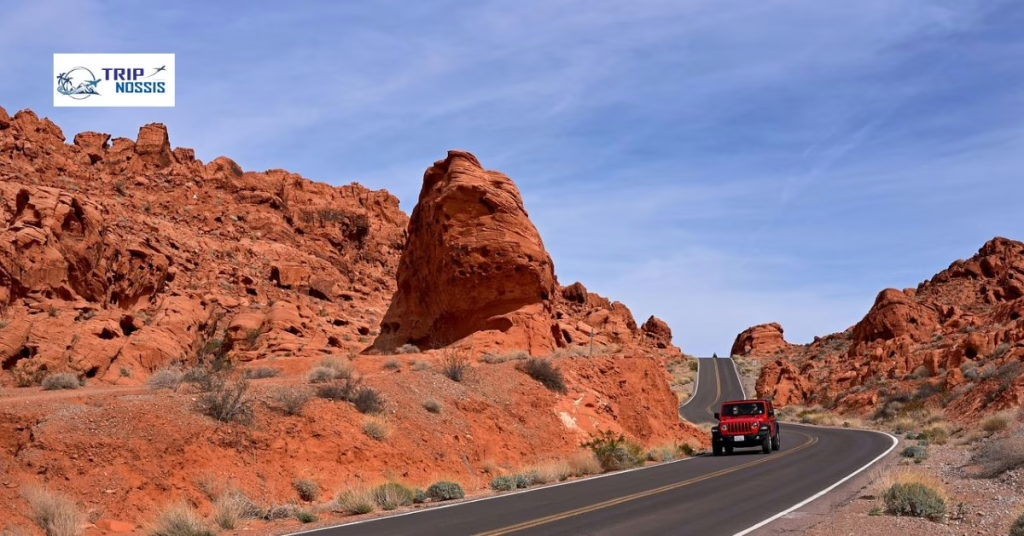
Book Accommodations Near the Strip for Easy Early Departures
Choosing accommodations with convenient highway access significantly impacts how smoothly your early morning departures proceed. Properties located along major routes exiting Las Vegas toward your destinations save valuable time compared to hotels deep within the Strip or downtown areas. When every minute counts on ambitious day trips, staying somewhere with quick access to highways makes your life substantially easier.
Hotels along Interstate 15 near the southern end of the Strip provide fastest access to destinations south and west, including Los Angeles, Death Valley (via Pahrump), and Seven Magic Mountains. Properties like the Luxor, Mandalay Bay, or nearby off-Strip hotels allow you to reach the highway within minutes of departing your parking lot.
The western edge of Las Vegas near Charleston Boulevard offers optimal positioning for Red Rock Canyon, cutting minutes off your drive compared to central Strip locations. Properties in Summerlin or near Red Rock Resort place you even closer to the conservation area, potentially allowing slightly later departures while still catching golden hour.
Northern Strip properties or hotels near the downtown area provide marginally better access to routes heading toward Zion, Valley of Fire, and destinations via Interstate 15 north. However, the differences are minimal compared to the southern exit routes, as navigating through or around Las Vegas takes time regardless of which end of town you start from.
Off-Strip properties often provide better value while maintaining reasonable access to highways. Chain hotels along the perimeter of Las Vegas offer lower rates than Strip resorts without adding significant drive time to reach destinations. The money saved on accommodations can fund better meals, park entrance fees, or other experiences.
Parking considerations at your hotel affect early morning departures. Self-parking properties allow you to come and go freely without waiting for valets, crucial when departing at 5:00 or 6:00 AM. Valet-only properties can create delays and tips add up quickly. Verifying parking arrangements before booking prevents morning frustrations.
Late-night check-ins don’t pose problems at Las Vegas hotels, as front desks operate 24 hours and room availability typically extends past standard 3:00 or 4:00 PM check-in times. However, confirming your late arrival with the hotel prevents any confusion or possibility of reservation cancellation.
Download Offline Maps Before You Go
Cell phone coverage disappears quickly once you leave Las Vegas’s metro area, making offline maps essential for navigation. Downloading maps before departing ensures you can navigate even in areas without cellular service, preventing the frustration and potential danger of becoming lost in remote desert areas where help might be hours away.
Google Maps allows downloading of offline map areas, though the process requires advance planning. Open the app while connected to WiFi, search for your destination, then select the “Download” option. You can download entire regions covering your planned route. These offline maps provide turn-by-turn navigation, though live traffic data and business information require connectivity.
Apple Maps has improved its offline functionality in recent iOS versions, allowing similar downloads. The interface differs slightly from Google Maps, but the basic concept remains the same. Download your route areas before losing cell service to ensure reliable navigation throughout your trip.
Specialized apps like Gaia GPS, AllTrails, and OnX Offroad provide detailed topographic maps valuable for hiking and off-road exploration. These apps often require paid subscriptions for full functionality, but the detailed trail maps and GPS tracking prove invaluable for backcountry adventures. Downloading specific trail maps before departing ensures you have them when needed.
Paper maps provide old-school backup that never runs out of battery and doesn’t depend on technology. National park visitor centers distribute excellent free maps showing trails, roads, viewpoints, and facilities. Collecting these maps provides orientation and serves as souvenirs. State highway departments provide free state maps at welcome centers and rest areas.
GPS units designed specifically for navigation offer an alternative to smartphone apps, with the advantage of not draining your phone battery. Many rental cars include built-in GPS systems, though the quality and current maps vary. Verifying that GPS directions match your intended route before departing prevents being misdirected onto inappropriate roads.
Battery management becomes critical when relying on phones for navigation. Car chargers or portable battery packs ensure your phone stays powered throughout long days. Enabling airplane mode when not actively using navigation reduces battery drain. Some phones offer power-saving modes that extend battery life by reducing background processes.
Check Weather and Road Conditions 24 Hours Before
Desert weather can change rapidly, and roads that were perfect yesterday might be closed today due to flash flooding, snow, or accident damage. Checking conditions within 24 hours of your trip allows you to adjust plans if necessary, preventing wasted drives to closed parks or dangerous encounters with severe weather.
National Park Service websites provide current conditions, alerts, and road status for each park. These official sources offer the most accurate and up-to-date information about closures, construction, and safety concerns. Check the specific park pages rather than relying on general information sites that might have outdated details.
State highway department websites report road conditions, closures, and construction for highways connecting Las Vegas to various destinations. Nevada DOT’s travel website covers conditions throughout the state, while neighboring states have equivalent services. These reports indicate whether roads are clear, snow-packed, icy, or closed.
Weather forecasts from services like weather.gov (National Weather Service) provide detailed, location-specific predictions that help you plan. Desert mountain areas can receive snow even when valleys remain warm, creating hazardous driving conditions. Flash flood warnings during monsoon season (July through September) indicate dangerous conditions where normally dry washes can become raging torrents within minutes.
Wind forecasts matter particularly for high-clearance vehicles, RVs, and trailers. Strong winds are common in the desert, especially in mountain passes and open valleys. High-wind warnings can make driving difficult or dangerous, particularly for vehicles with high profiles that catch wind like sails.
Temperature forecasts help you pack appropriate clothing and plan activity timing. Summer temperatures exceeding 110°F make midday hiking dangerous or impossible, requiring early morning starts. Winter freezes might mean ice on trails or roads requiring traction devices.
Social media and online forums sometimes provide real-time reports from visitors currently at destinations, offering ground-truth perspectives on conditions. Facebook groups, Reddit forums like r/NationalPark or r/ZionNationalPark, and Instagram location tags show recent visitor experiences. However, verify important information through official sources rather than relying solely on social media reports.
Flexibility in your plans allows you to adapt when conditions change. Having backup destination options means you can still salvage a day trip even if your primary target becomes inaccessible. Death Valley too hot? Switch to higher elevation Zion. Zion roads closed by snow? Head to lower elevation Valley of Fire instead. This adaptability transforms potential disappointment into successful adventures.
Seasonal patterns help predict likely conditions even before checking specific forecasts. Summer brings extreme heat and afternoon thunderstorms. Winter brings snow to higher elevations and occasional cold rain to valleys. Spring offers the most stable weather with moderate temperatures. Fall brings comfortable conditions but increasing chances of winter storms as the season progresses.
Respect Nature: Leave No Trace Principles
Preserving the spectacular natural areas around Las Vegas for future generations requires every visitor to practice responsible outdoor ethics. Leave No Trace principles provide a framework for minimizing your impact while maximizing your enjoyment. Following these guidelines ensures that these special places remain pristine despite receiving millions of visitors annually.
Pack out all trash, including organic waste like fruit peels and food scraps. While biodegradable items eventually decompose, they attract wildlife, create unsightly messes, and can take years to break down in arid desert environments. Bringing trash bags and collecting every piece of waste you generate shows respect for the landscape and other visitors. Many people practice “pack it in, pack it out plus one,” collecting one piece of litter left by others to leave places cleaner than they found them.
Stay on designated trails to prevent erosion and protect fragile desert soils and plant communities. Social trails created by people cutting switchbacks or wandering off established paths cause significant damage. Desert soils develop biological soil crusts containing cyanobacteria, lichens, and mosses that take decades to develop but can be destroyed by a single footstep. These crusts prevent erosion and help other plants establish themselves, making them critical to desert ecosystem health.
Respect wildlife by observing from a distance without feeding, touching, or harassing animals. Feeding wildlife disrupts natural behaviors, makes animals dependent on human food, and can be dangerous for both animals and people. The recommended minimum distance is 25 yards for most animals and 100 yards for predators like mountain lions (though these are rarely seen). Using telephoto lenses or binoculars allows close-up views without approaching too closely.
Leave natural and cultural artifacts in place for others to enjoy. Rocks, plants, fossils, pottery shards, arrowheads, and other items should remain where you find them. Federal laws protect archaeological and paleontological resources, with significant penalties for removal. The principle that “if everyone took one, there would be none” guides this ethic. Photographing interesting finds provides lasting memories without impacting the resource.
Minimize campfire impacts by using established fire rings where fires are permitted or, better yet, using camp stoves for cooking. Many desert areas prohibit fires due to extreme fire danger, scarce wood resources, and air quality concerns. Dead wood provides crucial habitat for insects and small animals, plus nutrients for soil when it decomposes. Where fires are allowed, keep them small, burn wood completely to ash, and fully extinguish fires before leaving.
Dispose of human waste properly by using provided toilets when available. In backcountry areas without facilities, bury waste in catholes dug 6 to 8 inches deep at least 200 feet from water sources, trails, and campsites. Pack out toilet paper and hygiene products in sealed bags, as these items don’t decompose quickly in dry environments and create unsightly litter. Some popular areas now require packing out all human waste using WAG bags or similar systems.
Respect other visitors by keeping noise levels reasonable, yielding to uphill hikers on trails, and stepping aside at viewpoints to allow others access for photographs. Sound carries far in quiet natural areas, and loud conversations or music disrupt both wildlife and others seeking peaceful experiences. Headphones keep music personal without impacting others.
Photography ethics include not damaging surroundings to get shots, not trespassing on private property or closed areas, and not disturbing wildlife or other visitors for photographs. Drone use is prohibited in all national parks and many other protected areas due to noise pollution and wildlife disturbance. Always check regulations before flying drones.
Start Planning Your Vegas Day Trip Adventure Today
The diverse landscapes surrounding Las Vegas create opportunities for adventure that few cities can match. Within a morning’s drive, you can stand in the hottest place on Earth, hike among ancient rock art, peer into mile-deep canyons, walk across massive dams, or photograph vivid red rock formations that seem to glow from within. Each destination offers unique experiences and perspectives, from the intimate scale of a narrow slot canyon to the overwhelming grandeur of vast desert vistas stretching to distant horizons.
Planning your day trips from vegas begins with understanding your own priorities and limitations. Consider your physical fitness when selecting hikes, your tolerance for driving when choosing destinations, and your interests when deciding between natural wonders and human-made attractions. There’s no single “best” day trip; the ideal choice varies based on season, weather, your energy level, and what captures your imagination.
Starting with closer destinations like Red Rock Canyon or Valley of Fire builds confidence and provides spectacular experiences without the commitment of all-day drives. These short day trips from las vegas let you test your planning skills, see how early you’re actually willing to wake up, and gauge your interest in desert landscapes. Success with these accessible destinations might inspire you to tackle more ambitious trips to Zion, Death Valley, or even the Grand Canyon.
Seasonal timing dramatically affects your experience, with spring and fall providing optimal conditions for most destinations. However, every season has merit if you choose appropriate locations and plan around temperature extremes. Winter visitors can enjoy Death Valley’s perfect weather while summer travelers find relief in high-elevation parks. Flexibility with timing and destination selection allows you to visit whenever your schedule permits rather than waiting for theoretical perfect conditions.
Investing in an America the Beautiful Annual Pass pays for itself quickly if you plan to visit multiple national parks or federal recreation areas. The $80 pass covers entrance fees for a full year, providing unlimited access to incredible destinations. Even if your only Vegas trip includes visits to just two or three national parks, the pass typically saves money compared to individual entrance fees.
Photography equipment needs vary based on your goals. Smartphones capture impressive images when used skillfully, eliminating the need for expensive cameras unless you’re particularly serious about photography. For those with dedicated cameras, wide-angle lenses suit landscape photography, while telephoto lenses help with wildlife and detail shots. Tripods enable long exposures and optimal image quality, though they add weight and bulk.
Physical preparation improves your experience, particularly if planning strenuous hikes. Building cardiovascular fitness and leg strength before your trip allows you to tackle longer trails without suffering. Even moderate preparation like taking daily walks for a few weeks before your trip makes a noticeable difference in your stamina and enjoyment.
Safety planning includes informing someone of your itinerary, carrying extra water and food, bringing first aid supplies, and knowing your limitations. Desert environments are beautiful but unforgiving of mistakes. Having backup plans, extra supplies, and realistic assessments of your abilities prevents minor issues from becoming emergencies.
The memories created on day trips from Las Vegas often outlast memories of time spent in casinos or at shows. While the city offers world-class entertainment, the natural wonders surrounding it provide something deeper and more lasting. The sense of scale at the Grand Canyon, the otherworldly landscapes of Death Valley, the spiritual peace of standing in a narrow canyon where light filters down from far above—these experiences connect you to something larger than yourself.
Budget considerations shouldn’t prevent you from exploring these destinations. Self-guided trips cost surprisingly little when you pack your own food, use fuel-efficient vehicles, and take advantage of free or low-cost attractions. Even travelers on tight budgets can experience spectacular scenery and create amazing memories with careful planning and willingness to DIY their adventures.
Environmental responsibility ensures these special places remain pristine for future generations. Every visitor shares responsibility for protecting the fragile desert ecosystems, respecting wildlife, and preserving archaeological sites. Practicing Leave No Trace principles, staying on trails, packing out trash, and following regulations protects resources while allowing continued public access.
Cultural sensitivity matters when visiting areas with significance to Native American tribes and other communities. Many spectacular landscapes hold spiritual or cultural importance beyond their visual appeal. Approaching these places with respect, learning about their significance, and following all posted rules and restrictions honors the people for whom these areas have meaning spanning generations or millennia.
Continuous learning enhances appreciation for the landscapes you visit. Reading about geology helps you understand how formations developed over millions of years. Learning about desert ecology reveals the remarkable adaptations plants and animals evolved to survive in extreme conditions. Understanding human history connects you to the people who inhabited these areas long before modern visitors arrived.
Sharing your experiences inspires others to explore while requiring responsibility. Social media posts showcasing spectacular scenery encourage friends and followers to visit, supporting local economies and fostering appreciation for public lands. However, this sharing comes with the responsibility to accurately represent locations, respect closures and restrictions, and encourage sustainable visitation practices.
The best time to start planning your day trip from vegas is now. Whether you’re currently in Las Vegas or planning a future visit, researching destinations, checking current conditions, and developing itineraries builds excitement and ensures successful adventures. The spectacular landscapes surrounding Sin City await your discovery, offering experiences that rival any man-made entertainment the Strip provides.
These natural wonders have existed for millions of years and will remain long after we’re gone, yet the opportunity to experience them is available right now. Every day trips from las vegas nv represents a chance to step outside your normal routine, challenge yourself physically and mentally, witness beauty that photographs can never fully capture, and create memories that last a lifetime. The only question remaining is: which adventure will you choose first?
If you have a pet, you can use our Pet Friendly Road Trip Planner to plan your trip.