
Virginia has one advantage most states cannot claim: every single state park allows dogs, and one of the most visited national parks on the East Coast, Shenandoah, permits pets on the vast majority of its trails. That combination is rare. Most East Coast weekend trip options force you to choose between a place your dog can enjoy and a place you actually want to visit. Virginia mostly lets you have both, as long as you know the rules before you leave.
This guide about Dog Friendly Weekend Getaways Virginia covers five weekend trip options that consistently work well for dog owners: the Shenandoah Valley and Skyline Drive, Virginia Beach, Williamsburg, Chincoteague and the Eastern Shore, and the wine country around Middleburg and Loudoun County. For each one, you will find what your dog can actually do, where the restrictions are, and the mistakes that trip up first time visitors most often.
Quick Answer: Where Can You Take Your Dog for a Weekend in Virginia?
Shenandoah National Park, Virginia Beach in the off season, Colonial Williamsburg’s outdoor areas, and nearly every Virginia state park are reliably dog friendly. The exceptions to watch for are Old Rag Mountain in Shenandoah, which bans pets entirely, and the Chincoteague National Wildlife Refuge on the Virginia side of Assateague Island, where pets are prohibited even inside a parked car. Rules can and do change, so confirm current policies with the official park or city website before you drive out.
Shenandoah National Park and Skyline Drive
Shenandoah is the single best mountain getaway for dog owners on the East Coast, and it is not close. Of the park’s more than 500 miles of hiking trails, fewer than 20 miles are closed to pets, a ratio you will not find in Yellowstone, Yosemite, or almost any other major national park. The park even runs a B.A.R.K. Ranger program, where you and your dog can earn a badge at a visitor center after learning the leash and cleanup rules.
Getting there: Shenandoah sits roughly ninety minutes to two hours from Washington, D.C., and about two hours from Richmond, depending on which entrance you use. Skyline Drive runs the length of the park and connects to the towns of Front Royal, Luray, and Waynesboro.
What your dog can do: Leashed dogs are welcome on the majority of trails, in most campgrounds, at picnic areas, and even in the Skyland and Big Meadows Lodges and their cabins. The leash must be a physical leash no longer than six feet at all times, and dogs cannot be left tied up and unattended.
The mistake almost everyone makes: Old Rag Mountain, the most photographed hike in the park, prohibits pets entirely on the Ridge, Saddle, and Ridge Access trails. Between March and November, hikers also need a separate day use ticket purchased in advance through the national recreation reservation system, on top of the regular park entrance pass, and that ticket has nothing to do with pets. If Old Rag is on your list, plan to leave your dog at your accommodation or skip that particular hike and choose one of the many other summit trails instead, such as Hawksbill or Bearfence.
Wildlife to plan around: Shenandoah has a healthy black bear population along with copperheads and timber rattlesnakes, so keeping your dog leashed is about more than following the rules. It genuinely reduces the odds of a dangerous encounter for both of you.
Best time to visit: Late spring and fall bring the most comfortable hiking temperatures and, in October, the fall foliage that draws crowds to Skyline Drive. Summer works too, but start hikes early to avoid midday heat on exposed rock sections.
Virginia Beach
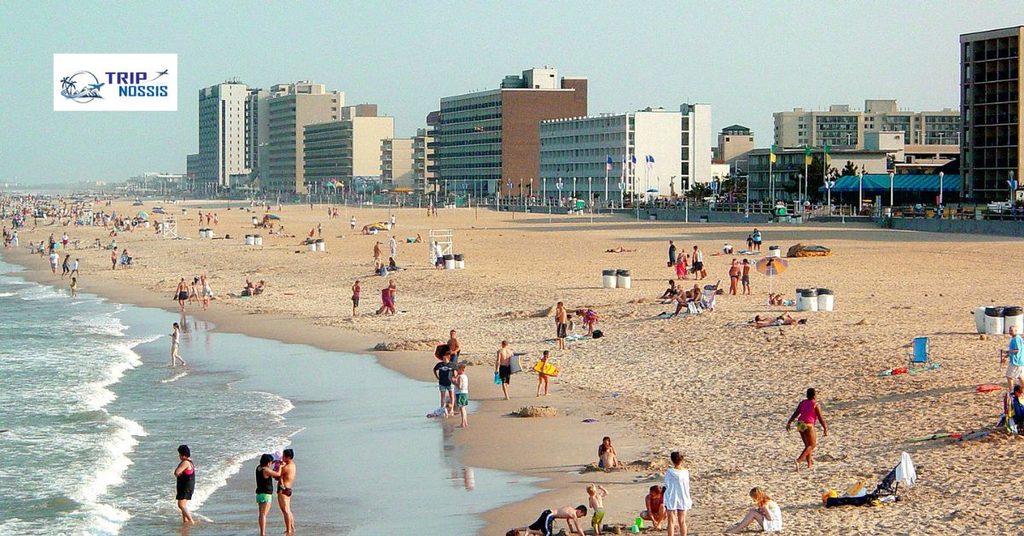
Virginia Beach markets itself as one of the more dog friendly beach cities on the East Coast, but the rules shift noticeably between the high season and the off season, and getting this wrong is the most common planning mistake for this trip.
Low season (before Memorial Day weekend and after Labor Day): Leashed dogs are welcome on the Boardwalk at any time, and dogs are permitted on the sandy beach at any time, off leash, as long as they are under voice control.
High season (Memorial Day weekend through Labor Day): Dogs are only allowed on the beach north of 42nd Street and in the Sandbridge area before 10 a.m. and after 6 p.m. The main Resort Area beach, between Rudee Loop and 42nd Street, is off limits to dogs during the day in summer. Leashed dogs are allowed on the Boardwalk itself between 6 a.m. and 7 p.m. during this stretch. These hours have changed in recent years, so check the current rules on the City of Virginia Beach website before you go, particularly if you are traveling in summer.
A better option for a summer trip with beach access: First Landing State Park, on the north side of the city, has beach frontage where leashed dogs are allowed year round, sidestepping the seasonal restrictions that apply to the main Oceanfront beaches.
Practical notes: Sand temperature climbs fast in July and August afternoon sun, so check it with your hand before letting your dog walk on it. Bring your own water rather than relying on public fountains, and rinse salt water off your dog’s paws and coat at the end of the day to prevent skin irritation.
Williamsburg and Colonial Williamsburg
Williamsburg works well for a history focused weekend because Colonial Williamsburg itself has a genuinely pet friendly outdoor area, something not every historic site can say.
What your dog can do: Leashed pets are allowed throughout much of the outdoor Historic Area, including the mile long Duke of Gloucester Street, often called DoG Street by locals, plus the Visitor Center. Chowning’s Tavern Garden and the Social Terrace at the Williamsburg Inn are pet friendly outdoor dining spots.
Where dogs cannot go: Pets are not allowed inside the historic buildings, trade shops, the Art Museums, the Rockefeller Library, or any ticketed indoor site. If your travel companions want to tour the Governor’s Palace or a trade shop, plan for one adult to wait outside with the dog on the shaded Palace Green, which is a pleasant spot for a picnic.
Lodging: Several Colonial Williamsburg owned hotels, including the Williamsburg Inn, Williamsburg Lodge, Griffin Hotel, and Williamsburg Woodlands, accept dogs, though each has its own weight limits, pet counts per room, and cleaning fees, so confirm the specific policy for your chosen property before booking.
Nearby options: Historic Jamestowne and Yorktown offer additional outdoor, dog friendly exploring if you want to extend history themed activities beyond the main Colonial Williamsburg area, and several private campgrounds around Williamsburg accept pets with no extra restrictions.
Chincoteague and the Eastern Shore
This is the destination where expectations and reality diverge the most, so read this section carefully before you build an itinerary around it.
Chincoteague is famous for its wild ponies, and many people assume that means the island is fully dog friendly. The town of Chincoteague itself generally is: leashed dogs can walk through downtown, and some restaurants offer outdoor seating. The town has also operated a permit based dog park in the past, though details like the fee and required documentation can change, so confirm current requirements directly with the Chincoteague town office before you rely on it.
What you cannot do: Pets are prohibited on the Chincoteague National Wildlife Refuge, which covers the Virginia portion of Assateague Island where the ponies, the lighthouse, and the main public beach are located. This is not a soft rule. The refuge bans pets even if they stay inside your car. If seeing the beach or the ponies up close is the point of your trip, you will need to arrange pet sitting or daycare on Chincoteague Island for that portion of the visit.
A workaround worth knowing: The Maryland side of Assateague Island, reached from a completely different entrance near Ocean City, does allow dogs in designated areas of Assateague Island National Seashore. It is roughly a fifty mile drive around the mainland to get from the Virginia side to the Maryland side, so this only makes sense if your weekend plan already includes both states.
Best for: Travelers who want a relaxed, small town coastal weekend with their dog and are comfortable treating the wildlife refuge as a separate, dog free side trip rather than the centerpiece of the visit.
Middleburg and Loudoun County Wine Country
For a slower paced weekend, the rolling countryside around Middleburg, Purcellville, and the wider Loudoun and Fauquier county wine region offers a different kind of dog friendly trip: scenic drives, walkable small towns, and outdoor patios rather than long hikes or beach time.
What to expect: Many wineries and breweries in this region allow leashed dogs on their outdoor patios and lawn areas, and it has become a fairly common regional practice. That said, policies vary property by property and can change with ownership, insurance requirements, or busy event weekends, so call ahead or check a winery’s website before driving out, especially if you are visiting during a festival or a Saturday afternoon rush.
Where to stay: Small inns and bed and breakfasts in towns like Middleburg and Leesburg vary widely in their pet policies, from fully welcoming to no pets at all, so confirm before booking rather than assuming.
Best for: Couples or small groups who want an easygoing weekend built around scenery, local shops, and outdoor dining rather than heavy hiking, plus travelers looking for something closer to Washington, D.C. than Shenandoah’s more remote sections.
Comparing the Five Destinations
| Destination | Best For | Approx. Drive from D.C. | Key Restriction to Know |
|---|---|---|---|
| Shenandoah National Park | Hiking, mountain scenery | 1.5 to 2 hours | Old Rag Mountain bans pets entirely |
| Virginia Beach | Beach time, boardwalk strolls | 3.5 to 4 hours | Summer beach access is limited to early morning and evening |
| Williamsburg | History, walkable outdoor sightseeing | 2.5 to 3 hours | Dogs cannot enter ticketed buildings |
| Chincoteague and Eastern Shore | Small town coastal charm | 3 to 3.5 hours | Wildlife refuge and main beach are off limits to pets |
| Middleburg wine country | Relaxed countryside, wineries | 1 hour | Pet policies vary winery by winery |
Drive times are approximate and will vary with your starting point and traffic. Use them for rough planning, not as a substitute for checking a live map before you leave.
Planning a Dog Friendly Road Trip in Virginia: What Actually Matters
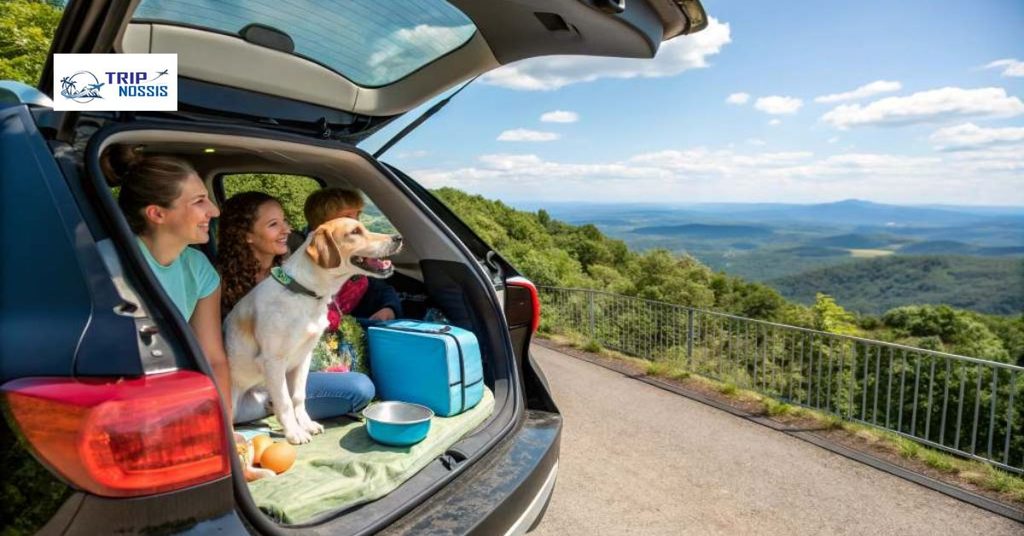
A good destination is only half the trip. The details you sort out before leaving home usually determine whether the weekend goes smoothly.
Before you leave:
• Confirm your dog’s rabies vaccination is current and bring the paperwork, since some parks and campgrounds request proof on arrival.
• Make sure your dog’s microchip information and ID tag are up to date, especially with an unfamiliar area’s contact number if you are staying somewhere for multiple days.
• Pack a basic pet first aid kit, including tick removal tools, since ticks are common throughout Virginia’s wooded and grassy areas from spring through fall.
• Bring your own water and a collapsible bowl for the car and for trails. Do not assume streams or public fountains will be available or safe for your dog to drink from.
On the road:
• Plan rest stops every two to three hours on longer drives so your dog can relieve itself and move around.
• Never leave your dog alone in a parked car, even briefly and even with the windows cracked. Temperatures inside a vehicle rise quickly and can become dangerous within minutes, particularly from late spring through early fall.
• If your dog gets carsick, feed a lighter meal a few hours before departure rather than right before getting in the car, and talk to your veterinarian ahead of time if motion sickness is a recurring issue.
Questions worth asking a hotel before you book:
• Is there a per night pet fee, and is it per stay or per pet?
• Is there a size or breed restriction?
• Can the dog be left alone in the room, and if so, are there conditions, such as being crated?
• Are there designated relief areas on the property?
Questions worth checking before visiting any specific attraction or trail:
• Are dogs allowed on this specific trail, or only in the broader park? Many parks that are broadly dog friendly still close a handful of specific trails, as Shenandoah does with Old Rag.
• Is there a seasonal restriction, such as the summer beach hours in Virginia Beach?
• Is there an entrance fee or a separate ticket requirement beyond the standard entrance fee?
Common Mistakes to Avoid
Assuming Chincoteague’s wildlife refuge is dog friendly because the town is. This is the single most common planning error for this trip. The town and the refuge have completely different rules.
Booking a summer Virginia Beach trip expecting all day beach access. During the high season, the main Oceanfront beach is only open to dogs outside of daytime hours. Off season trips, or a stay near First Landing State Park, avoid this problem entirely.
Planning Old Rag as the centerpiece of a Shenandoah trip with a dog. It is the park’s most famous hike, but it is also one of the few places in the park where dogs are not allowed at all, and it requires its own separate ticket regardless of pets.
Skipping the heat check. Between hot pavement in historic districts, hot beach sand in summer, and exposed rock scrambles in the mountains, Virginia’s own scenery is often the biggest heat risk to a dog’s paws and body temperature. Early starts and shaded routes solve most of this.
Frequently Asked Questions
Are dogs allowed in Shenandoah National Park?
Yes. Leashed dogs are permitted on most of the park’s trails, in most campgrounds, and in the park’s lodges and cabins. A small number of trails, most notably Old Rag Mountain, prohibit pets entirely.
Is Virginia Beach dog friendly in the summer?
Partly. Dogs can only access the main beach before 10 a.m. and after 6 p.m. during the high season, from Memorial Day weekend through Labor Day. Outside those months, beach access is open at any time.
Can I bring my dog to Colonial Williamsburg?
Yes, in the outdoor Historic Area, including Duke of Gloucester Street, as long as the dog is leashed. Dogs cannot enter ticketed buildings, museums, or the library.
Are dogs allowed on Chincoteague Island?
The town of Chincoteague is generally dog friendly, but the adjacent Chincoteague National Wildlife Refuge, which includes the main public beach and the ponies’ habitat, prohibits pets entirely, even inside a vehicle.
Do Virginia state parks charge a pet fee?
There is generally no extra charge for pets in campgrounds, though cabin rentals commonly carry an additional nightly pet fee. Dogs are not allowed on designated swimming beaches or inside indoor facilities such as visitor centers and bathhouses. Fees can change, so confirm current amounts on the Virginia State Parks website before booking.
What should I pack for a dog friendly weekend trip in Virginia?
Vaccination records, an updated ID tag, a leash no longer than six feet for national park and state park visits, a collapsible water bowl, waste bags, a basic pet first aid kit, and tick prevention, since ticks are common throughout the state from spring through fall.
Is it safe to hike with my dog in the Virginia mountains?
Generally yes, if you keep your dog leashed and plan around wildlife such as black bears and venomous snakes, which are both present in Shenandoah. Bring enough water for your dog, watch for signs of overheating on exposed sections, and check individual trail rules before you go, since not every trail in a dog friendly park allows pets.
Where to Go From Here
If your dog is an eager hiker, start with Shenandoah and build the weekend around one or two moderate trails rather than Old Rag. If beach time matters most, aim for the off season in Virginia Beach or head straight to First Landing State Park to sidestep the summer restrictions. And if you are still deciding between a mountain trip and a coastal one, base the choice on your dog’s energy level and heat tolerance more than on the scenery alone. Whichever destination you pick, a five minute check of the official park or city website before you leave will save you from the two mistakes that trip up the most travelers: Old Rag and the Chincoteague refuge.
If you have a pet, you can use our Pet Friendly Road Trip Planner to plan your trip